
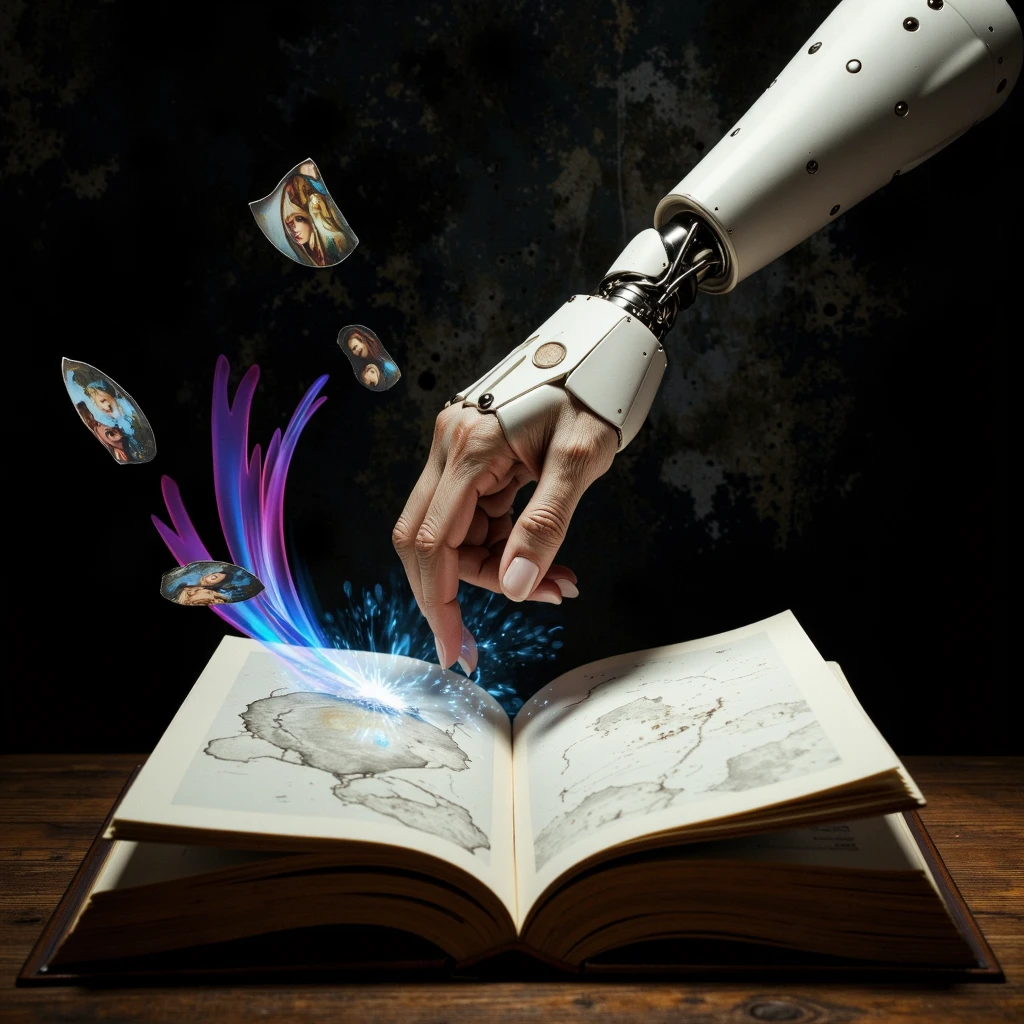
 While the traditional art market celebrates auction records for Claude Lalanne’s bronze mirrors at $33.5 million, a quieter but equally revolutionary phenomenon is taking shape at the intersection of immersive technology and luxury design. The recent collaboration between Gucci and Google for the creation of high-end smart glasses represents much more than a mere commercial maneuver—it is a signal that the barriers between seemingly distant worlds are definitively collapsing.
This essay explores how the current technological landscape is redefining the boundaries of artistic expression, immersive experience, and luxury consumption, creating a new aesthetic language that transcends traditional categories.
The Democratization of XR Creation and Its Artistic Implications
The recent launch of Meta’s Agentic Workflow for WebXR development marks a fundamental turning point. This tool promises to revolutionize the way immersive content is created, allowing developers to generate WebXR prototypes simply through textual prompts[cite: 1].
This innovation is not just a matter of technical convenience. It represents a profound shift in the relationship between creator and tool, similar to the impact digital photography had compared to analog.
In fact, while the Photography Show celebrates the entire evolution of the photographic medium “from its origins to AI”, we are witnessing a historical parallel: just as photography democratized the image, AI tools for XR are democratizing immersive environments.
However, this accessibility raises crucial questions about the nature of authorship. When a virtual environment is primarily generated through an AI prompt, who is truly the author? The artist who wrote the prompt or the algorithm that interpreted it?
The Immersive Experience as a New Art Form
The case of “EXD – Extra Dimensional” perfectly illustrates this evolution. Described as “a dark & disturbing VR adventure” that offers a “stunning display of VR visuals and an incredible auditory experience of dread and fear”, this title represents an example of how immersive experiences are becoming art forms in their own right.
The interesting element is that, despite its impressive technical qualities, the review notes that the game “falls short of its full potential”. This observation reflects how the criteria for artistic evaluation are evolving for these new expressive forms.
Just as visitors to Francisco de Zurbarán’s exhibition at the National Gallery in London can appreciate “the many sides” of the Spanish painter, from “intimate still lives to shadowed saints”, users of XR experiences also seek narrative depth and emotional complexity, not just technical virtuosity.
The crucial difference is that while Zurbarán’s work is fixed and immutable, the XR experience is inherently malleable and interactive, requiring new critical parameters.
Luxury and Technology: An Inevitable Convergence
The partnership between Gucci and Google to create luxury smart glasses represents a turning point in the perception of wearable technology. It is no longer just a question of functionality, but of cultural identity and social status.
This collaboration arrives at a strategic time for Gucci, which is trying to recover following a sharp decline in revenue (19-22%, as reported in Source 4). The choice to enter the wearable technology market is not accidental: it represents an attempt to reposition itself as an avant-garde brand capable of interpreting new forms of luxury.
The parallel with the art market is illuminating. Just as Claude Lalanne’s bronze mirrors reached record prices at Sotheby’s auction, partly due to their provenance from the Yves Saint Laurent collection, the Gucci-Google glasses will also acquire value not only for their functionality but for their cultural significance and exclusivity.
This phenomenon is part of a broader context where technology is becoming a new territory for the expression of luxury and exclusivity, as demonstrated by the growing importance of events like AWE USA 2026, described as “the biggest XR event of the year”.
The Future of the Intersection Between Art, Technology, and Luxury
Looking to the future, we can anticipate a further fusion of these seemingly separate worlds. The example of Isomorphic Labs, a DeepMind spin-off, bringing AI-designed drugs to human trials, demonstrates how artificial intelligence is penetrating increasingly diverse and crucial areas.
In the artistic and luxury context, this suggests that we will soon see algorithmically personalized immersive experiences that adapt to individual tastes, creating a new paradigm of tailor-made cultural consumption.
Art fairs like The Photography Show, which seeks to be “both an accessible entry point for new collectors and a place for connoisseurs to discover”, could soon incorporate elements of extended reality to create hybrid experiences, where physical works are augmented by digital layers accessible through devices like the Gucci-Google glasses.
This future is not without tensions. Tradition and innovation, exclusivity and democratization, authenticity and simulation will continue to coexist in a complex dialogue that will constantly redefine the boundaries of aesthetic experience.
The true challenge will be maintaining a balance that preserves the value of human artistic expression while embracing the possibilities offered by new technologies.
In conclusion, the current convergence of art, immersive technology, and luxury is not simply a passing trend, but a profound cultural realignment that is redefining the way we create, consume, and attribute value to aesthetic experience. From Meta’s Agentic Workflow to Gucci’s smart glasses, we are witnessing the birth of a new expressive language that merges code and culture, algorithms and craftsmanship, in ways that would have astonished Zurbarán and early photographers alike.
The true revolution is not only technological but profoundly cultural: we are redefining what it means to create and what it means to appreciate art in the age of digital immersion.
References:
- Meta AI Agentic Workflow for WebXR development: how to get started and hands-on impressions
- EXD – Extra Dimensional Review: A Dark & Disturbing VR Adventure
- Enter for Your Chance to Win a Free Pass to the Biggest XR Event of the Year
- Gucci Partners with Google on Luxury Smart Glasses, Reportedly Launching Next Year
- From intimate still lives to shadowed saints: the many sides of Spanish painter Francisco de Zurbarán go on show at London’s National Gallery
- AI-Designed Drugs by a DeepMind Spinoff Are Headed to Human Trials
- Claude Lalanne’s set of bronze mirrors shatters artist’s auction record at Sotheby’s
- The Photography Show fair’s 45th edition explores medium’s full history from its origins to AI
This essay was generated using an artificial intelligence workflow designed and supervised by Enzo Gentile. The sources were automatically selected and analyzed, and the final text was critically reviewed before publication.