
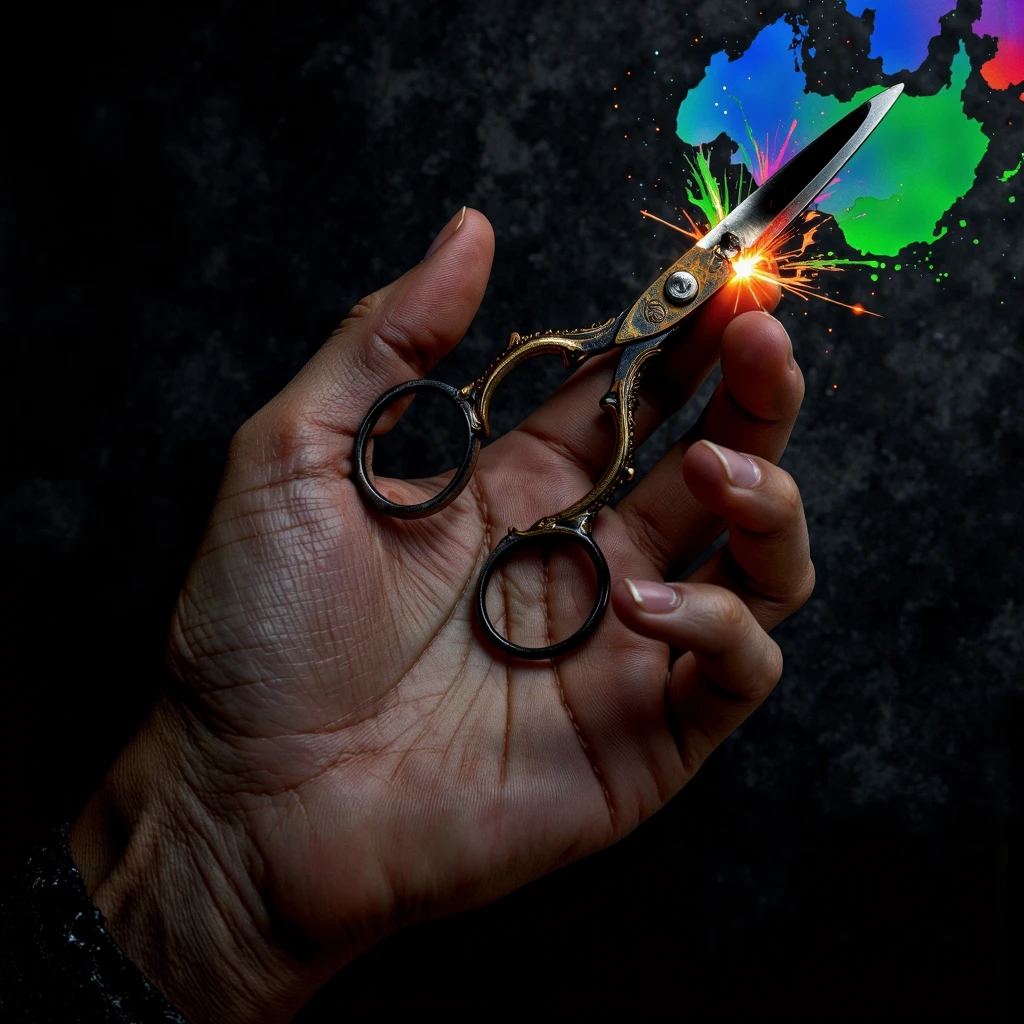
 The ability of art to transcend limits is perhaps its most revolutionary characteristic. Whether it is a bedridden Matisse in the last years of his life or virtual reality developers creating interfaces for people with reduced mobility, the overcoming of physical barriers represents one of the most powerful points of connection between traditional art and new technologies.When we observe different artistic manifestations throughout the eras, a common thread emerges: the creative resilience that pushes artists and innovators to find new expressive languages despite—or perhaps thanks to—seemingly insurmountable constraints. This essay explores how art, in all its forms, continues to thrive precisely when it challenges its own limits.
Rebirth Through Adaptation: From Matisse to Adaptive Interfaces
The current exhibition at the Grand Palais in Paris offers us an extraordinary example of how adaptation can generate innovation. Featuring over 300 works created in the last 13 years of his life, the exhibition on Henri Matisse reveals how the artist, bedridden by illness, transformed this limitation into a new visual language.This creative resilience finds a surprising parallel in the approach of Owlchemy Labs, which recently introduced a pinch-based artificial turning system for hand tracking in the game Dimensional Double Shift. Both examples illustrate how accessibility does not merely represent a necessary adaptation but can become the catalyst for new expressive forms.The 2Sync technology, with its ability to dynamically adapt to the user’s real environment, represents a further step in this direction. By creating a mixed reality experience that molds itself to the available physical space , this innovation echoes Matisse’s approach when, unable to paint, he developed his famous “cut-outs” using colored paper and scissors.In both cases, we see how the transformation of constraints into opportunities can lead to revolutionary artistic results. It is not the limitation itself that defines the work, but the creative response it elicits.
Transversal Inspirations: The Dialogue Between Different Art Forms
The power of interdisciplinary inspiration clearly emerges in the case of Salvador Dalí’s painting “Necrophiliac Spring,” which directly influenced Elsa Schiaparelli in the creation of her iconic Tears Dress. This historical example of cross-pollination between visual art and fashion anticipates current experimentations between virtual reality and traditional art.In fact, the works of Stephen Morrison, with their trompe-l’œil dogs that seem to step beyond the boundaries of the canvas, play with the spectator’s perception in a manner similar to mixed reality experiences. Morrison invites observers to “rediscover the magic and absurdity often obscured by routine” —a goal shared by the developers of 2Sync when creating virtual environments that blend with everyday reality.This creative cross-pollination between different disciplines is not just a contemporary phenomenon but a constant in art history, as demonstrated also by the French government’s interest in preserving the recently discovered drawing by Hans Baldung, considered “a work of great historical and artistic interest”.The conservation of historical works and technological innovation are therefore not opposed, but complementary: both aim to preserve and expand human expressive possibilities.
Connecting Infrastructures: Physical and Virtual Bridges
The cultural exchanges between Hong Kong and mainland China, facilitated by new physical infrastructures and organic artistic collaborations, offer an illuminating parallel to the digital art ecosystem. Just as the museums of Shenzhen and Guangzhou build cultural bridges through new railway and air routes, digital platforms have attempted to create connections between artists and collectors.The case of Nifty Gateway, with its ambitious but unrealized goal of converting a billion people into NFT collectors, reveals much about the nature of the digital art ecosystem. Its rise and fall underscore the importance of building sustainable infrastructures for artistic innovation, whether physical or virtual.The lesson that emerges from these examples is that technology, like any expressive medium, requires a balance between visionary ambition and solid foundations. The same challenges that characterized the cultural integration between geographically close but historically separated regions reappear in the attempt to integrate traditional art with new technologies.This parallel invites us to consider how cultural connectivity, whether facilitated by physical infrastructures or digital platforms, always represents a form of translation between different languages, with all the opportunities and complexities that ensue.
Conclusion: Art as the Perpetual Overcoming of Limits
From Matisse’s creative adaptation in the face of illness to innovations in virtual reality accessibility , from the mutual influence between painting and fashion to the building of physical and virtual cultural bridges, a unifying theme emerges: art thrives when it confronts and overcomes its own limits.New technologies do not represent a break with artistic tradition, but its natural evolution. Just as Matisse transformed his immobility into a new creative freedom , mixed reality developers are transforming the limitations of physical space into new expressive possibilities.In an era where the distinction between physical and virtual becomes increasingly blurred, art continues to play its fundamental role: reminding us that boundaries exist primarily to be overcome, and that human creativity flourishes precisely when it confronts its apparent limitations.
References:
- ‘Every minute was a minute to create’: Paris show presents Henri Matisse’s dazzling finale
- 2Sync hands-on: true mixed reality that adapts to your real environment
- Dimensional Double Shift Gets Hand-Tracked Artificial Turning For Accessibility
- Dalí painting that inspired Schiaparelli dress to be shown in UK for first time
- Understanding Nifty Gateway’s demise is paramount for NFTs’ fans and critics alike
- Museums in Shenzhen and Guangzhou are building bridges between Hong Kong and mainland China
- French government blocks sale of newly discovered drawing by German Renaissance master Hans Baldung
- Stephen Morrison’s Trompe-L’œil ‘Dog World’ Paintings Are Fetching
This essay was generated using an artificial intelligence workflow designed and supervised by Enzo Gentile. The sources were automatically selected and analyzed, and the final text was critically reviewed before publication.