
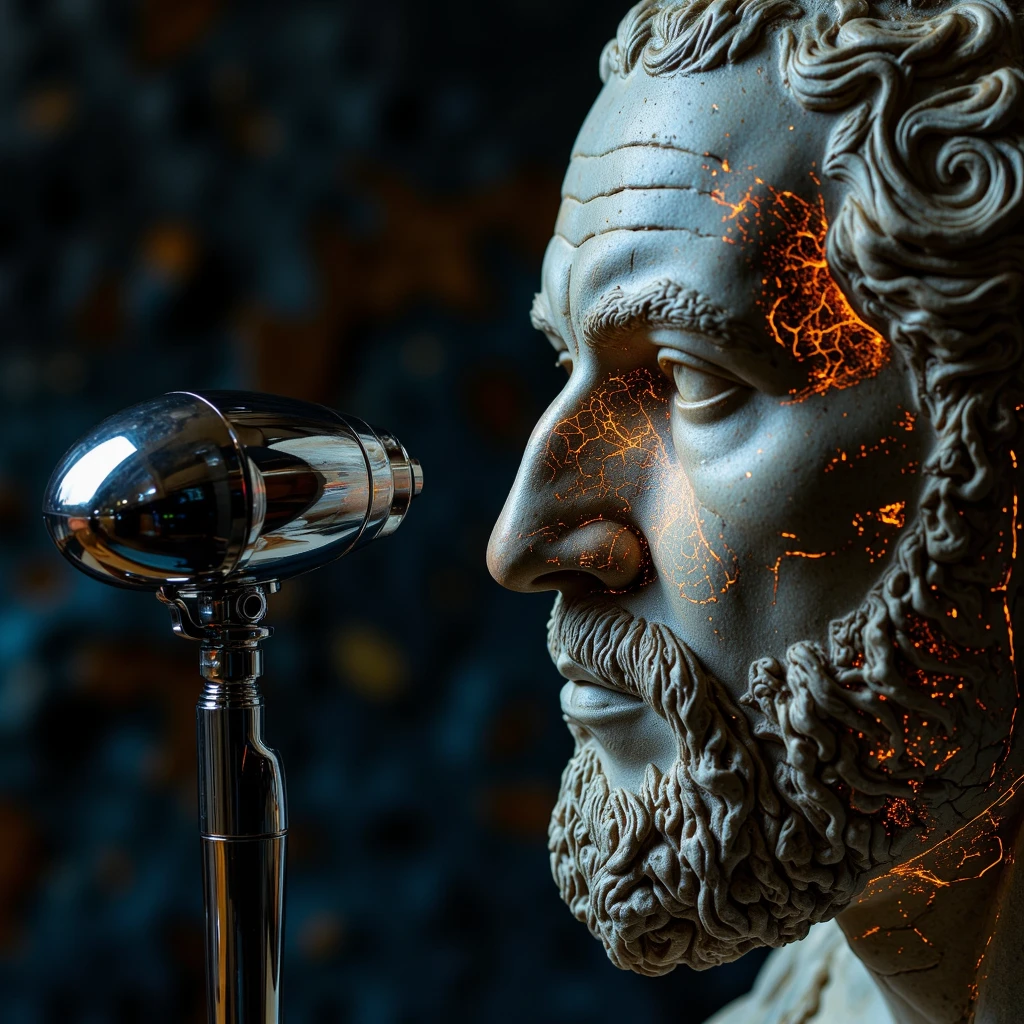
 While Yann LeCun raises a billion dollars to develop an artificial intelligence that understands the physical world (Source 1), traditional museums struggle to survive financially (Source 7). This dramatic disparity in resources between technology and traditional cultural institutions signals a radical transformation in how we perceive, create, and preserve culture. The collision between these seemingly distant worlds is redefining the very concept of artistic and cultural experience.
LeCun’s approach with his startup AMI represents a crucial turning point: an artificial intelligence that does not limit itself to manipulating language but understands and interacts with the physical world. This vision could revolutionize not only technology but also how we conceive art and its fruition.
Physical-World Understanding AI: New Frontiers for the Artistic Experience
Yann LeCun’s project to create an artificial intelligence that understands the physical world (Source 1) could radically transform the way we interact with art. Unlike linguistic models like ChatGPT, which are already being queried today on artistic issues such as the Venice Biennale (Source 2), LeCun’s AI aims to understand three-dimensional reality.
This technological evolution aligns perfectly with the expansion of the XR (Extended Reality) sector, as highlighted by the growing importance of the AWE USA 2026 conference (Source 3). The event, focused on gaming and Location-Based Entertainment, represents a point of convergence for immersive technologies that are radically transforming the artistic experience.
The imminent launch of games like Darts VR2: Bullseye on all major VR platforms (Source 8) demonstrates how the gamification of experience is penetrating every aspect of digital culture. It is not difficult to imagine a future in which LeCun’s embodied AI merges with these immersive experiences, creating new forms of artistic fruition that transcend the physical limits of traditional museums.
Traditional Institutions: Between Economic Crisis and Innovation
While the technology sector attracts billions in investment, the traditional art market faces a deep crisis. The closure of the prestigious Stephen Friedman gallery and the struggling balance sheets of major auction houses (Source 7) reveal a cultural ecosystem in deep economic distress.
In parallel, historic institutions like the Louvre seek to renew themselves. Former president Pierre Rosenberg is cementing his legacy through a four-volume catalogue on Poussin and a new museum for his vast collection (Source 4). These efforts represent attempts to preserve and revitalize the artistic tradition in an era of rapid change.
A significant example of innovation in traditional institutions is the recent restoration of the monumental Rubens painting at Whitehall, London, now accessible up close thanks to a newly installed elevator (Source 6). This intervention demonstrates how even centuries-old art can benefit from technological innovation to improve the visitor experience.
The Venice Biennale: A Mirror of Geopolitical and Technological Tensions
The Venice Biennale emerges as a microcosm of the tensions running through the art world. On one hand, artificial intelligence is questioned about its historical importance for Italian artists (Source 2); on the other, geopolitical controversies emerge over the Russian presence, with official protests from Kyiv (Source 5).
This dual tension—between technological innovation and tradition, between global openness and geopolitical fractures—perfectly reflects the contradictions of the contemporary artistic landscape. The Biennale thus becomes not only an artistic event but a social laboratory where the forces redefining our relationship with culture manifest.
ChatGPT’s interest in the Biennale (Source 2) also suggests how artificial intelligence is already becoming an actor in cultural discourse, capable of analyzing and commenting on artistic events. This raises profound questions about the nature of artistic interpretation in the age of AI.
Towards a Synthesis: Art in the Era of Embodied Intelligence
LeCun’s vision of an artificial intelligence that understands the physical world (Source 1) could represent the necessary bridge between the digital world and that of traditional art. An AI capable of understanding materiality, spatiality, and corporeality could offer new ways of preserving, interpreting, and creating art.
Imagine a future in which the works of Poussin cataloged by Rosenberg (Source 4) or the recently restored Rubens ceiling (Source 6) can be not only digitized but understood by an artificial intelligence in their physical and material dimension.
This understanding could transform into immersive experiences through XR technologies such as those presented at the AWE conference (Source 3), creating new forms of artistic fruition that combine the richness of tradition with the possibilities offered by technology.
The economic crisis of the art market (Source 7) could find an answer precisely in this synthesis, creating new business and cultural fruition models that transcend the physical limits of traditional galleries.
Conclusion
The apparent contrast between the billion dollars invested in LeCun’s embodied AI and the crisis of traditional art galleries is not necessarily a sign of cultural decline, but rather the indication of a profound transformation in how we produce, distribute, and consume art.
The geopolitical tensions emerging at the Venice Biennale, technological innovations in the field of XR, efforts to preserve traditional artistic heritage: all these elements are part of a rapidly evolving cultural ecosystem.
The challenge for the future will be to find a creative synthesis between these seemingly colliding worlds, using new technologies not to replace the traditional artistic experience, but to amplify it and make it accessible to an increasingly vast and diversified audience.
The embodied artificial intelligence imagined by LeCun might not be the enemy of traditional art, but its most powerful ally in navigating the complex waters of our cultural future.
References:
- Yann LeCun Raises $1 Billion to Build AI That Understands the Physical World
- ParlaChatGPT: the Venice Biennale most important for Italian artists? The year was…
- XR’s “Must-go” Conference Expands Gaming & LBE Focus for 2026
- Profile | Pierre Rosenberg, the former Louvre president, on his long-awaited four-volume Poussin catalogue—and forthcoming museum
- Controversy over Russian presence at the Venice Biennale: official protest from Kyiv
- Monumental Rubens ceiling painting revealed once more after two-year renovation
- Show me the money: UK gallery and auction house accounts reveal reality of a tough market
- Darts VR2: Bullseye Coming To Quest, PlayStation VR2 & PC VR Soon
This essay was generated using an artificial intelligence workflow designed and supervised by Enzo Gentile. Sources were automatically selected and analyzed, and the final text was critically reviewed before publication.