
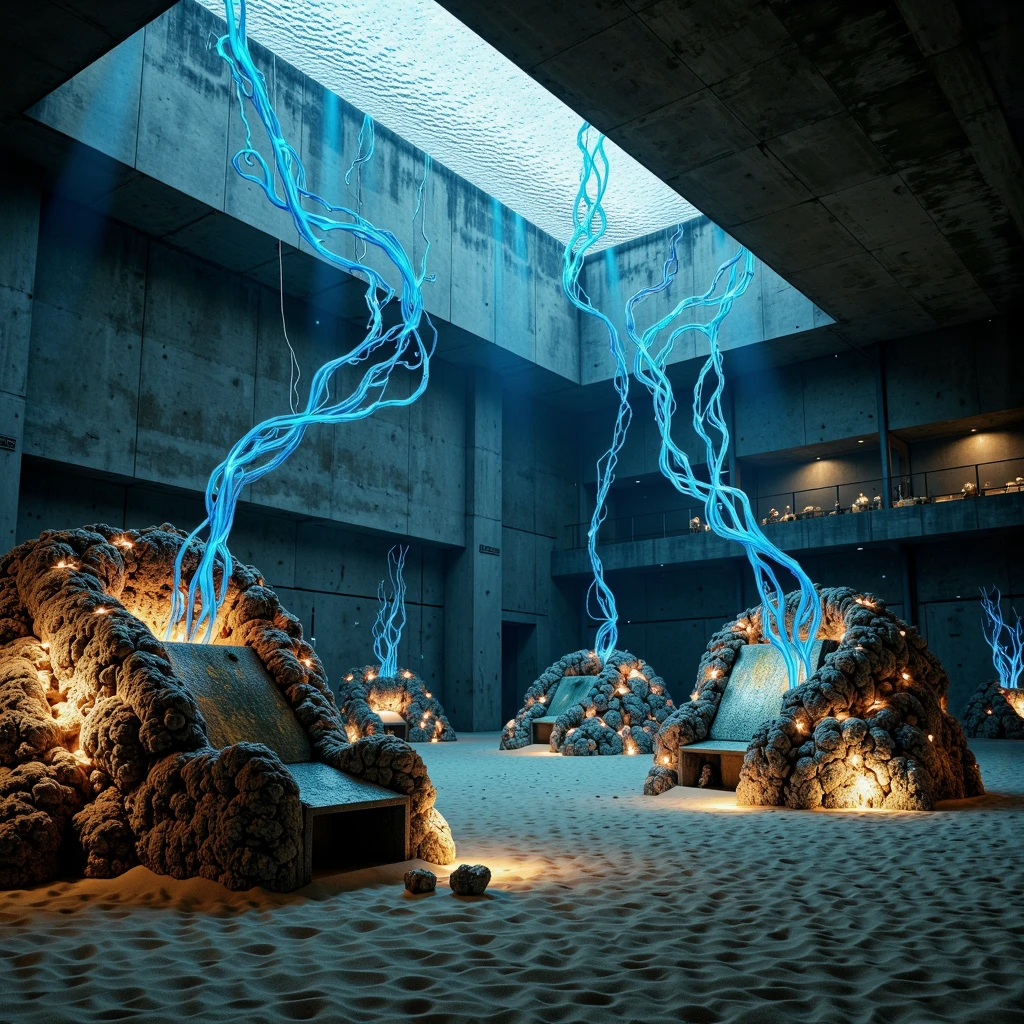
 The metamorphosis of public spaces through the integration of art and technology is redefining our relationship with environments previously considered purely functional. From international airports to ocean floors, to the very eyes with which we observe the world, we are witnessing a silent revolution that merges artistic creativity and technological innovation. This convergence represents not just an aesthetic evolution, but a profound transformation of how we perceive and interact with the surrounding reality.
In this essay, we will explore how new immersive technologies are expanding the boundaries of contemporary art, creating experiences that transcend traditional exhibition spaces and integrate into the fabric of daily life, from urban mobility to marine depths.
The Democratization of Immersive Art Experience
New York’s JFK Airport is revolutionizing the very concept of transit space. The new Terminal One, partially scheduled to open as early as 2026, has been conceived as an environment where the artistic experience organically integrates with the daily dynamics of the airport (Source 3). This vision represents a paradigmatic shift in the enjoyment of contemporary art.
The project involves seven artists commissioned to create installations and immersive experiences that will transform the airport’s common spaces. It is not simply about beautifying a place of passage, but radically rethinking the relationship between art, the public, and urban space.
This trend towards the democratization of artistic experience finds a surprising parallel in the Reefline project in Miami Beach. Artist Leandro Erlich has created the first work for this underwater sculpture park, using concrete cars to form an artificial reef (Source 8). The installation transcends the mere aesthetic dimension to become an active ecological intervention, aimed at regenerating corals and marine biodiversity.
Both projects challenge the traditional conception of art as an object to be contemplated in dedicated spaces. The artistic experience instead becomes an integral part of everyday or unexpected environments, accessible to a much wider and more diverse audience than that of conventional museums.
Wearable Technologies: When Art Becomes Interface
Parallel to the expansion of artistic spaces, we are witnessing the emergence of technologies that transform the very way we perceive and interact with the world. Alibaba’s Quark AI smart glasses represent the latest frontier in this evolution, positioning themselves in direct competition with Meta Ray-Ban Display (Source 1).
These wearable devices, equipped with displays and integrated artificial intelligence, are not simple technological accessories, but true perceptual interfaces that mediate and enrich our experience of reality. Wearable technology is rapidly evolving from a purely functional tool to an expressive and artistic medium.
Simultaneously, in the field of virtual reality, FluxPose is redefining the possibilities of bodily interaction in digital environments. This six-degrees-of-freedom body tracking system has already raised over $2 million on Kickstarter (Source 6), demonstrating the enormous interest in technologies that allow for a more natural and complete immersion in virtual spaces.
FluxPose promises to overcome the limitations of previous systems, offering positional tracking without occlusion and without the need for external base stations (Source 2). This innovation could represent a turning point for accessibility and artistic expressiveness in virtual environments.
The Dialogue Between Tradition and Innovation
While new technologies redefine the boundaries of contemporary art, we are also witnessing a renewed interest in the dialogue between innovation and tradition. Palazzo Strozzi in Florence, one of the most prestigious Italian exhibition spaces, will host in the spring of 2026 one of the largest retrospectives ever dedicated in Italy to Mark Rothko (Source 4).
This exhibition, titled “Rothko in Florence,” will place the works of the American Color Field master in dialogue with the palace’s Renaissance architecture. It is significant that this event takes place in the same venue that currently hosts, together with the Museo di San Marco, a celebrated exhibition dedicated to Fra Angelico (Source 7).
The coexistence of these exhibitions in the same space, albeit at different times, highlights how contemporary artistic innovation can enter into creative resonance with tradition, creating new meanings and perspectives. This dialogue between ancient and modern mirrors, on a different level, the same creative tension that characterizes the integration of art and new technologies.
Meanwhile, the world of virtual reality video games continues to expand with titles like REAVE, the new dungeon-crawler extraction game from studio Alta (Source 5). These virtual environments represent creative laboratories for experimenting with new forms of storytelling and interaction, often anticipating developments that later find application in more traditional artistic fields.
Towards a New Ecology of Aesthetic Experience
Together, these developments suggest the emergence of a new ecology of aesthetic experience, characterized by the permeability of boundaries between art, technology, and daily life. It is not simply about applying new technologies to art or making technological objects more artistic, but fundamentally rethinking the relationship between creativity, perception, and space.
The Reefline project in Miami Beach (Source 8) perhaps represents the most emblematic example of this new ecology. An artwork that is simultaneously an environmental intervention, a tourist attraction, and a habitat for marine organisms challenges any traditional categorization.
Similarly, Alibaba’s smart glasses (Source 1) and body tracking systems like FluxPose (Source 2 and 6) are not just technological gadgets, but extensions of our perceptual and expressive capacity that could radically transform the way we interact with art and the world.
JFK Airport (Source 3), with its immersive installations integrated into transit spaces, represents a model of how public environments can become places of meaningful aesthetic experience, overcoming the dichotomy between functional spaces and dedicated art spaces.
In this new ecology of aesthetic experience, even traditional art institutions like Palazzo Strozzi (Source 4 and 7) take on a different role, becoming nodes in a broader network where past and future, physical and digital, artistic and functional intertwine in novel and surprising ways.
In conclusion, the integration of art and new technologies is creating a richer and more complex cultural ecosystem, where aesthetic experience is no longer confined to dedicated spaces and moments but potentially permeates every aspect of daily life. This transformation brings with it significant challenges, but also extraordinary opportunities to rethink the role of art in contemporary society and its relationship with technological innovation.
References:
- Alibaba Launches Smart Glasses to Rival Meta Ray-Ban Display
- FluxPose Could Be The Spiritual Successor To Lighthouse Tracking
- L’aeroporto JFK di New York investe ancora sull’arte. Al nuovo Terminal One installazioni ed esperienze immersive
- Mark Rothko a Firenze: annunciata la primavera di Palazzo Strozzi
- ‘Township Tale’ Studio’s New VR Extraction Dungeon Crawler Launches Open Playtests This Week
- FluxPose VR Tracker Raises $2M on Kickstarter, Promising Compact 6DOF Body Tracking
- The Big Review | Fra Angelico at Palazzo Strozzi and Museo di San Marco, Florence ★★★★★
- Concrete cars for coral reefs: Miami’s underwater eco-sculpture park takes shape
This essay was generated using an artificial intelligence workflow designed and supervised by Enzo Gentile. The sources were selected and analyzed automatically, and the final text was critically reviewed before publication.