
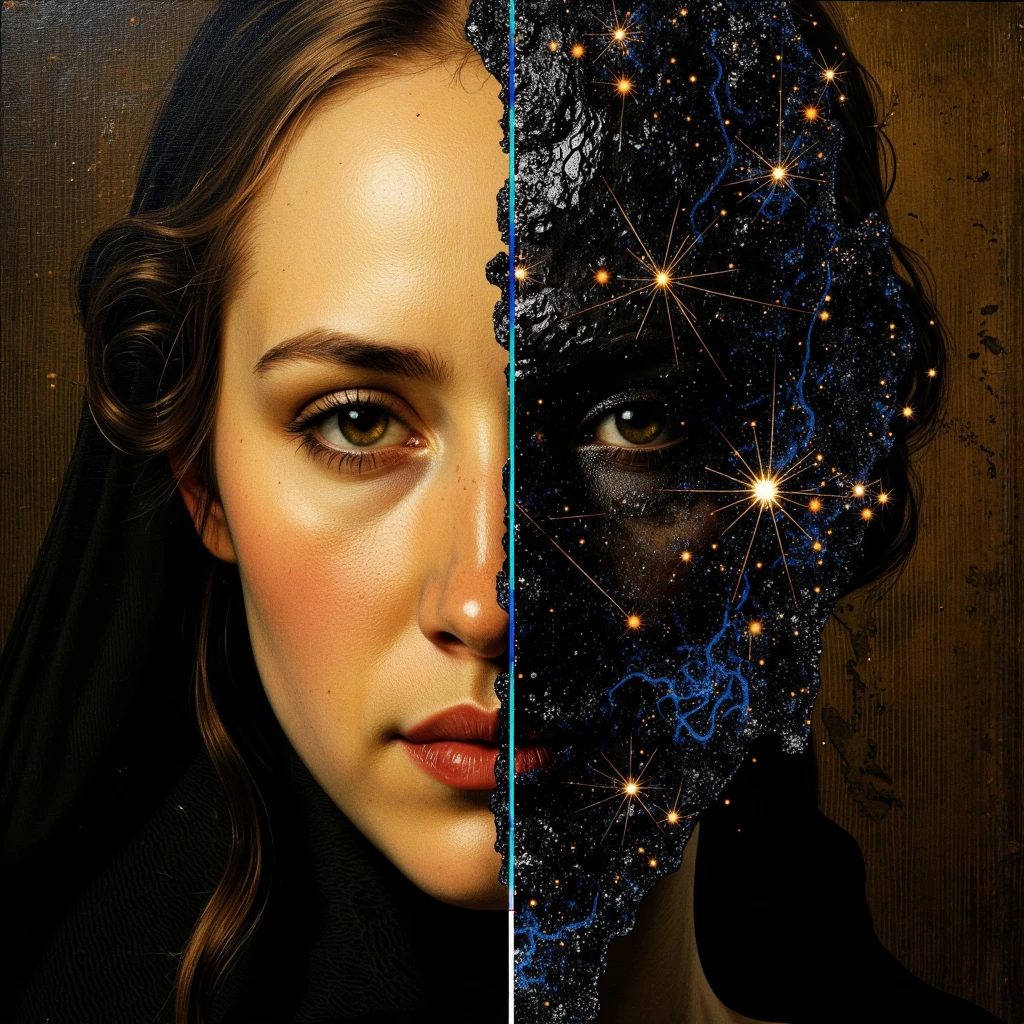
 What happens when a forgotten work of art comes back to light through contemporary investigative methods? The recent reattribution of ‘Vision of Zacharias in the Temple’ to Rembrandt raises fundamental questions about the relationship between artistic tradition and technological innovation. This event represents only the tip of the iceberg of a broader phenomenon involving museums, alternative galleries, and virtual spaces, all committed to redefining how we interact with art.
The transformation of the contemporary artistic landscape manifests through a continuous dialogue between past and future, conservation and experimentation. From the scientific analysis of classical works to the creation of immersive virtual reality experiences, we are witnessing an evolution that challenges traditional barriers between artistic, scientific, and technological disciplines.
Rediscovering the Past: Technology at the Service of Tradition
The Rijksmuseum recently completed a two-year study on the 17th-century painting ‘Vision of Zacharias in the Temple,’ finally attributing it to Rembrandt after years of uncertainty (Source 1). This investigative process serves as an illuminating example of how modern technologies can reveal hidden truths within classical works.
Scientific pigment analysis, advanced imaging techniques, and computerized comparative studies have allowed for conclusions that would have been impossible even a few decades ago. This reattribution is not merely a matter of museum prestige; it reflects a contemporary approach to the conservation of artistic heritage.
In parallel, the British Museum secured a £5 million sponsorship for the display of the Bayeux Tapestry, facilitating school access to this historical masterpiece (Source 2). This initiative highlights how the democratization of art today relies on private financial support and innovative accessibility strategies.
The funding, provided by billionaire Igor Tulchinsky, raises questions about the role of contemporary patrons. Unlike the Renaissance Medicis, modern art philanthropists operate in a globalized context where private economic resources become essential tools for the public enjoyment of cultural heritage.
Material Experimentation and Unconventional Exhibition Spaces
While traditional institutions focus on preserving the past, alternative spaces like the U-Haul Gallery in Los Angeles promote radically experimental approaches. Artist Alexis Rockman recently exhibited a work created using tar from the famous La Brea Tar Pits (Source 3).
This material choice represents a fascinating convergence between art and geology, between creative expression and natural history. Tar, a primordial material that has preserved fossils for millennia, becomes a contemporary artistic medium, creating a temporal bridge between prehistory and the present.
The decision to exhibit in an unconventional gallery like U-Haul further emphasizes how exhibition spaces themselves are evolving. Traditional ‘white cubes’ are giving way to unexpected locations, redefining the context in which art is consumed and interpreted.
Mediation and Modernity: Rethinking Art in the Digital Age
The ‘Media and Modernity’ program has operated for 25 years as an ongoing seminar, bringing together faculty and students to explore the intersections between media and modernity (Source 4). This interdisciplinary approach reflects the need to develop new theoretical frameworks to understand art in the era of digital mediation.
The initiative, held in a brutalist building that is itself a symbol of architectural modernity, represents an attempt to theorize the complex relationships between artistic production, technology, and contemporary society. The project’s longevity testifies to the growing importance of these themes in the cultural debate.
On the side of consumption, experiences like ‘Space Control’—a VR job simulator inspired by Rick & Morty and Futurama—demonstrate how art is colonizing new immersive territories (Source 5). These ludic-artistic experiences challenge traditional categorizations, positioning themselves in a gray area between entertainment, interactive art, and social critique.
The polarization of public reactions to these works—oscillating between enthusiasm and unease—reflects the tensions inherent in contemporary art, always balanced between popular accessibility and conceptual experimentation.
Hybridization as a New Artistic Paradigm
By analyzing these cases cross-sectionally, a common thread emerges: hybridization as a dominant strategy in the contemporary artistic landscape. From the Rijksmuseum employing advanced technologies to study Rembrandt (Source 1) to the artist using prehistoric tar as a painting medium (Source 3), we witness a constant crossing of disciplinary boundaries.
This trend toward hybridization is also evident in the physical and virtual spaces dedicated to art. The university seminar held in a brutalist building (Source 4) and the VR experience merging sci-fi narrative with simulation (Source 5) represent new ways of contextualizing the artistic experience.
Significantly, even funding and accessibility models reflect this hybridization, with private capital supporting public access to cultural heritage (Source 2). Contemporary art thus emerges as a complex ecosystem where tradition and innovation, public and private, material and virtual coexist in a continuous dialogue.
In this context, the distinction between artist, curator, scientist, and technologist becomes increasingly blurred, suggesting the emergence of new hybrid professional figures in the art world.
Conclusion
The contemporary artistic landscape is a frontier territory in constant redefinition. From the reattribution of historical works through advanced technologies to the creation of immersive virtual reality experiences, art confirms itself as a privileged space for negotiation between past and future.
Traditional institutions like the Rijksmuseum and the British Museum are reinventing themselves through innovative approaches to conservation and accessibility, while alternative spaces like the U-Haul Gallery and VR platforms explore new expressive frontiers.
In this dialectic between conservation and experimentation, between materiality and virtuality, contemporary art does not represent a break with the past, but rather its continuous recontextualization through the lenses of technology and critical theory. The future of art seems to lie precisely in this ability to build bridges: between eras, disciplines, materials, and diverse audiences.
References:
- ‘Lost’ painting reattributed to Rembrandt by Rijksmuseum’s researchers
- British Museum secures £5m sponsorship for Bayeux Tapestry display
- What in tarnation is U-Haul Gallery showing now?
- Media and Modernity: 25 Years of Thinking Through Mediation
- Sci-Fi Job Sim Space Control Is Equal Parts Charm & Cringe
This essay was generated using an AI workflow designed and supervised by Enzo Gentile. The sources were automatically selected and analyzed, and the final text was critically reviewed before publication.“