
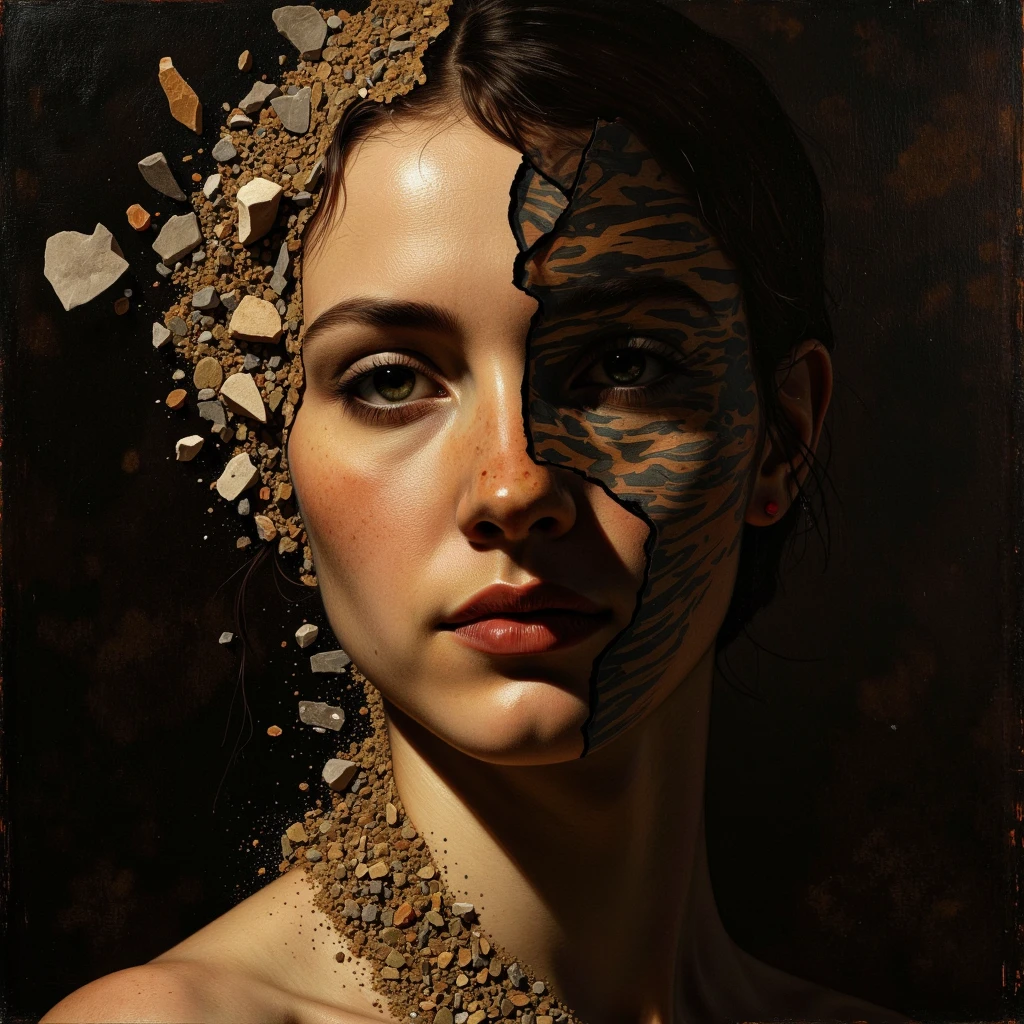
 €30 million for a Caravaggio , while the facilities dedicated to Vasarely are falling apart. This contrast synthesizes the complex relationship between the conservation of artistic heritage and innovation in the contemporary art market. Recent events in the art world reveal deep tensions between the valorization of tradition and the push towards new expressive forms, including digital ones.The preservation of artistic heritage, the attribution of works, economic dynamics, and technological evolution intertwine today in unpredictable ways, redefining our relationship with art. This essay explores how these contrasting forces are shaping the future of the global art landscape.
The Shifting Value of Artistic Heritage
Italy’s purchase of a Caravaggio portrait for €30 million represents one of the highest sums ever paid by the Italian state for an artwork. This astronomical figure raises questions about the value attributed to historical artistic heritage compared to contemporary art.Simultaneously, the foundation dedicated to Victor Vasarely, a pioneer of Op Art, is in a state of abandonment after years of neglect and funding issues. The artist’s family hopes to secure a new chapter for his legacy in Aix-en-Provence.This contrast highlights how institutions and governments often prioritize the acquisition of iconic works over the maintenance of facilities dedicated to more recent artists. The disparity in treatment between Renaissance masters and 20th-century innovators reflects a hierarchy of values that deserves critical analysis.Furthermore, the debate over the attribution of a work to Michelangelo demonstrates how crucial the issue of authenticity is in determining the economic and cultural value of art. The controversies among experts regarding signatures and styles reveal the fragility upon which much of the art market is based.
Cultural Programming and Museum Renewal
Tate has announced an ambitious exhibition program for 2027, including exhibitions dedicated to David Hockney, Edvard Munch, and Sonia Boyce. This plan, presented as director Maria Balshaw steps down, also includes exhibitions by the modernist Algerian artist Baya and the British Thomas Gainsborough.In parallel, the Musée d’Orsay is proposing a double exhibition on Renoir that explores the joy of human connection, demonstrating how the artist went beyond “pretty little pictures”. These events reveal how museum institutions are trying to balance the exhibition of canonical artists with figures less represented in the dominant artistic narrative.The recent passing of Pedro Friedeberg, a key figure in Mexican art known for his hand-shaped chair , reminds us of the importance of preserving and celebrating the contributions of artists who created singular worlds of ornament, architecture, and irony outside the Western canon.These curatorial developments demonstrate an attempt to broaden the traditional artistic canon, including diverse voices and approaches that challenge established art narratives.
The Art Economy Between Recovery and Digital Challenges
The Art Basel and UBS report reveals that global art sales grew by 4% in 2025, reaching approximately $59.6 billion, although remaining below pre-pandemic levels. Political volatility and rising operational costs weigh heavily on trade.This fragile recovery of the traditional art market clashes with the challenges posed by the emerging digital ecosystem. John Carmack, former CTO of Oculus, criticizes the incentive structure for Meta developers, calling the 30% fee a “wasteful churn” compared to subsidizing individual apps.His observations on the virtual reality world highlight how traditional economic models are struggling to adapt to new forms of digital artistic expression. The tension between high fees and the need to incentivize creative innovation mirrors similar challenges in the physical art market.Indeed, the parallelism between the traditional and digital art worlds emerges clearly: both face issues of valorization, authenticity, and economic sustainability in an uncertain global context.
Towards a New Paradigm of Conservation and Innovation
The coexistence of restoration initiatives like that of the Vasarely Foundation and criticisms of the economic models of digital platforms suggests the need for an integrated approach to the conservation of artistic heritage and technological innovation.Museums and cultural institutions are at a crossroads: on one hand, they must preserve and enhance historical works of immense value; on the other, they must embrace new expressive and technological forms to remain relevant.Tate’s 2027 programming represents an attempt to navigate this complexity, balancing canonical artists with diverse voices and innovative approaches. However, it remains to be seen whether these institutions will fully successfully integrate the possibilities offered by emerging technologies.The main challenge consists of creating ecosystems that value both traditional artistic heritage and new forms of digital expression, without sacrificing one for the other.In this context, cultural policies and funding models assume crucial importance in determining which art forms will thrive in the future.The modest growth of the art market suggests that the sector is seeking a new equilibrium in a world transformed by the pandemic and digital technologies.The debate over the attribution of works to masters like Michelangelo could soon extend to questions of authenticity in AI-generated art and other emerging media.In conclusion, the contemporary art landscape is in a moment of profound transformation, where the tensions between preservation and innovation, tradition and technology, and economic and cultural value are redefining our relationship with art. Institutions, collectors, artists, and the public will need to collaborate to navigate this complexity and create a future where diverse art forms can coexist and prosper.The true value of art, whether it is a €30 million Caravaggio or a virtual reality experience, lies in its ability to connect people across different eras and technologies, stimulating dialogue, reflection, and mutual understanding.
References:
- Tate announces major David Hockney, Edvard Munch and Sonia Boyce exhibitions for 2027
- Pedro Friedeberg, key figure in Mexican art renowned for hand-shaped chair, has died at age 90
- Former Oculus CTO Calls Meta’s 30% VR Dev Fee “wasteful churn” in Face of Subsidizing Individual Apps
- Caravaggio portrait of influential patron—and future Pope Urban VIII—purchased by Italy for €30m
- Victor Vasarely’s crumbling Aix legacy to be restored
- Two Renoir exhibitions at Musée d’Orsay explore the joy of human connection
- ‘It has nothing to do with Michelangelo’: expert wades in on painting newly attributed to Renaissance master
- Global art sales grew 4% in 2025 but remain below pre-pandemic levels, Art Basel and UBS report finds
This essay was generated using an artificial intelligence workflow designed and supervised by Enzo Gentile. The sources were automatically selected and analyzed, and the final text was critically reviewed before publication.