
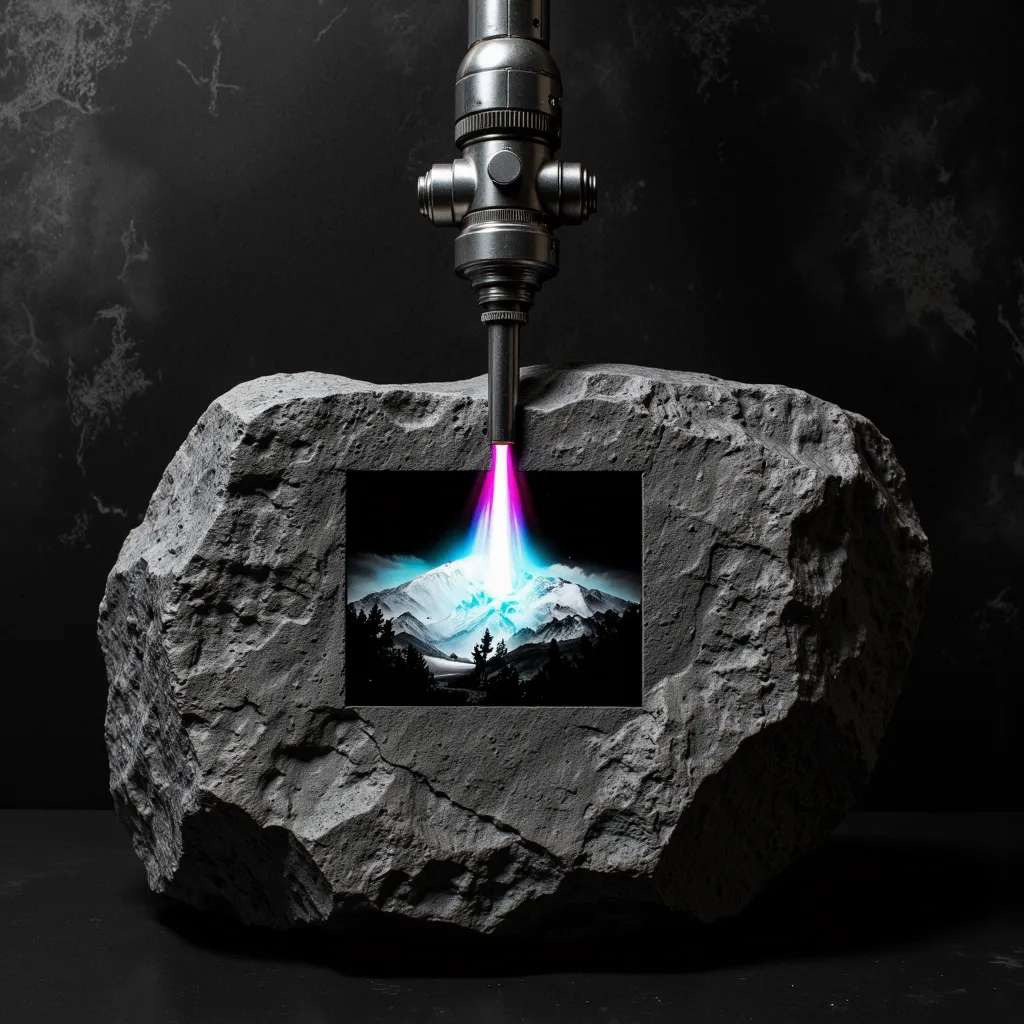
 What happens when an algorithm adds color to a photograph that its creator intended to be in black and white? The question is not technical: it is a matter of power, of ownership, and of respect for the original creative intention. And it forces us to rethink the very meaning of authorship at a time when physical bodies, virtual spaces, and artificial intelligences are vying for the right to define what art is.
This essay explores a precise thesis: the tension between the preservation and transformation of an artwork does not stem from technology, but from the fragility of human structures—markets, institutions, communities—that build value and meaning around art. From the artificial intelligence that rewrites Ansel Adams’ photographs to the virtual communities struggling to survive the shutdown of their worlds, to the museums trying to metabolize change without being overwhelmed by it, there is only one common thread: who decides the fate of a shared aesthetic experience?
The Adams Case: When the Market Masquerades as Innovation
The controversy that erupted over the “colorized” version of a famous photograph by Ansel Adams is revealing. Gallerist James Danziger used artificial intelligence to add color to an image deliberately conceived in black and white, sparking a reaction from the artist’s estate.
The accusation is clear: Danziger allegedly exploited an unauthorized operation to promote a commercial colorization business applicable to other creators. However, deeper analysis suggests that the real problem does not lie in artificial intelligence itself[cite: 1].
As pointed out in the commentary published in The Art Newspaper, the issues raised by this affair are “deeply and irrevocably human”[cite: 1]. AI is the tool, but the driving force is the usual one: the art market seeking new commodities to sell, even at the cost of violating an author’s will[cite: 1]. In fact, colorization does not add aesthetic information; it subtracts the original expressive choice, replacing it with an algorithmically driven decision oriented toward profit.
This dynamic reveals a structural paradox. The art world celebrates authorship as a supreme value, yet it is willing to sacrifice it the moment technology offers an economic opportunity. The question, therefore, is not whether AI *can* colorize a photo, but why anyone considers it legitimate to do so against the artist’s will.
Present Bodies, Absent Worlds: The Fragility of Shared Experience
If the Adams case concerns the manipulation of an artistic object, other contemporary events question the very survival of the spaces in which art is experienced. The progressive closure of virtual worlds like those hosted on platforms such as Rec Room and Meta’s Horizon Worlds produces a specific and underestimated grief.
Anyone who has spent time in these environments knows that their disappearance does not equate to the end of a product. It equates to the erasure of relationships, memories, and creative practices built collectively. Consequently, communities are developing autonomous survival strategies, migrating to other platforms or archiving what they can.
This phenomenon dialogues surprisingly with the work of Marina Abramović, whose entire career is based on the idea that art exists in the body and in the moment, not in the object. As emerges from the selection of five essential publications curated by Shai Baitel, Abramović’s poetics oscillates between intimate memoir and aphoristic collection, testifying to an artistic practice that rejects material permanence[cite: 2].
However, this very impermanence generates a problem analogous to that of virtual worlds: how do you preserve what is by definition ephemeral? The performance vanishes after execution; the virtual world vanishes after the server shutdown. In both cases, the community of witnesses becomes the only living archive.
Between Physical and Digital: Breathing Sculptures, Promising Glasses
The interactive installation “There, Now, Here” by the duo Wade and Leta, presented in Sydney, offers an alternative model of the relationship between body and technology. Visitors climb onto a seesaw and, through their own physical movement, modify an ecological soundscape inspired by the sun-bleached Australian landscape.
The artwork functions because it does not delegate the experience to the machine: it makes it impossible without bodily participation. The sound changes only if someone moves. This approach represents the exact opposite of the Adams colorization, where the algorithm acts upon the work without any human body involved in the aesthetic decision.
On the purely technological front, Acer’s return to the extended reality market with new AR and smart glasses marks a reversal of course after nearly seven years of absence. The company had abandoned the sector after its last PC VR headset in 2019. This re-entry signals that the industry is still betting on the overlap between the physical and digital worlds, despite past failures.
Yet, the very story of closing virtual worlds should suggest caution. XR technology promises new spaces of experience, but without guarantees regarding their duration. Consequently, every artwork conceived for these environments is born already exposed to the risk of extinction.
Institutions in Transition: Museums, AI, and Rediscovered Paintings
How are cultural institutions preparing for this scenario? The case of the Cincinnati Museum Center is significant. Instead of adopting artificial intelligence from the top down, the museum built a true internal learning community, offering staff a protected space to understand the practical implications of AI.
The intuition is simple but powerful: most museum professionals do not need to be convinced that AI is changing things. They need a safe place to understand what this means concretely. This bottom-up approach contrasts with the speculative logic of the Adams case, where technology is dropped from the outside for commercial purposes.
Concurrently, the traditional art world continues to produce discoveries that no algorithm could generate. A painting by Leonora Carrington, created during the surrealist’s confinement in a Spanish sanatorium, will be exhibited for the first time at the Freud Museum in London before traveling to Faro Santander.
This artwork, born in a context of psychic and creative suffering, possesses an authenticity that no algorithmic colorization can replicate. Its value lies precisely in the unrepeatable specificity of the circumstances in which it was created—a powerful reminder that the most significant art emerges from unique human conditions.
Conclusion: Guarding the Intention, Not Just the Image
The panorama emerging from these events is shot through with a fundamental tension. On the one hand, increasingly sophisticated tools allow art to be transformed, distributed, and experienced in unprecedented ways. On the other, every transformation risks betraying the original intention if it is not guided by ethical awareness.
The Ansel Adams case demonstrates that the market can instrumentalize AI for its own ends. The closure of virtual worlds reveals how precarious digital cultural memory is. Wade and Leta’s installation points to a possible path: technology at the service of the body, not in its place.
Museums like Cincinnati are building the necessary antibodies to face change without suffering it. And rediscovered works like Carrington’s remind us that the irreducible core of art remains the human experience—fragile, situated, impossible to automate. The real challenge is not deciding whether to use technology, but learning to protect what technology, alone, can never create: intention.
References:
- Comment | Furore over ‘colourised’ Ansel Adams photo reflects problems with the art market, not AI – The Art Newspaper
- An expert’s guide to Marina Abramović: five must-read books on the performance artist – The Art Newspaper
- An Interactive Sculpture by Wade and Leta Celebrates the Sun-Bleached Australian Landscape – Colossal
- Acer Re-enters XR with New AR & Smart Glasses – Road to VR
- As Virtual Worlds Close, Communities in ‘Rec Room’, Meta’s ‘Horizon Worlds’, and Others Create Ways to Survive – Road to VR
- How Cincinnati Museum Center Built an AI Learning Community – MuseumNext
- Rediscovered Leonora Carrington painting to go on show for the first time at London’s Freud Museum – The Art Newspaper
- Bad moon rising: AI debate erupts over ‘colourised’ version of a classic Ansel Adams photo – The Art Newspaper
This essay was generated using an artificial intelligence workflow designed and supervised by Enzo Gentile. The sources were automatically selected and analyzed, and the final text was critically reviewed before publication.