
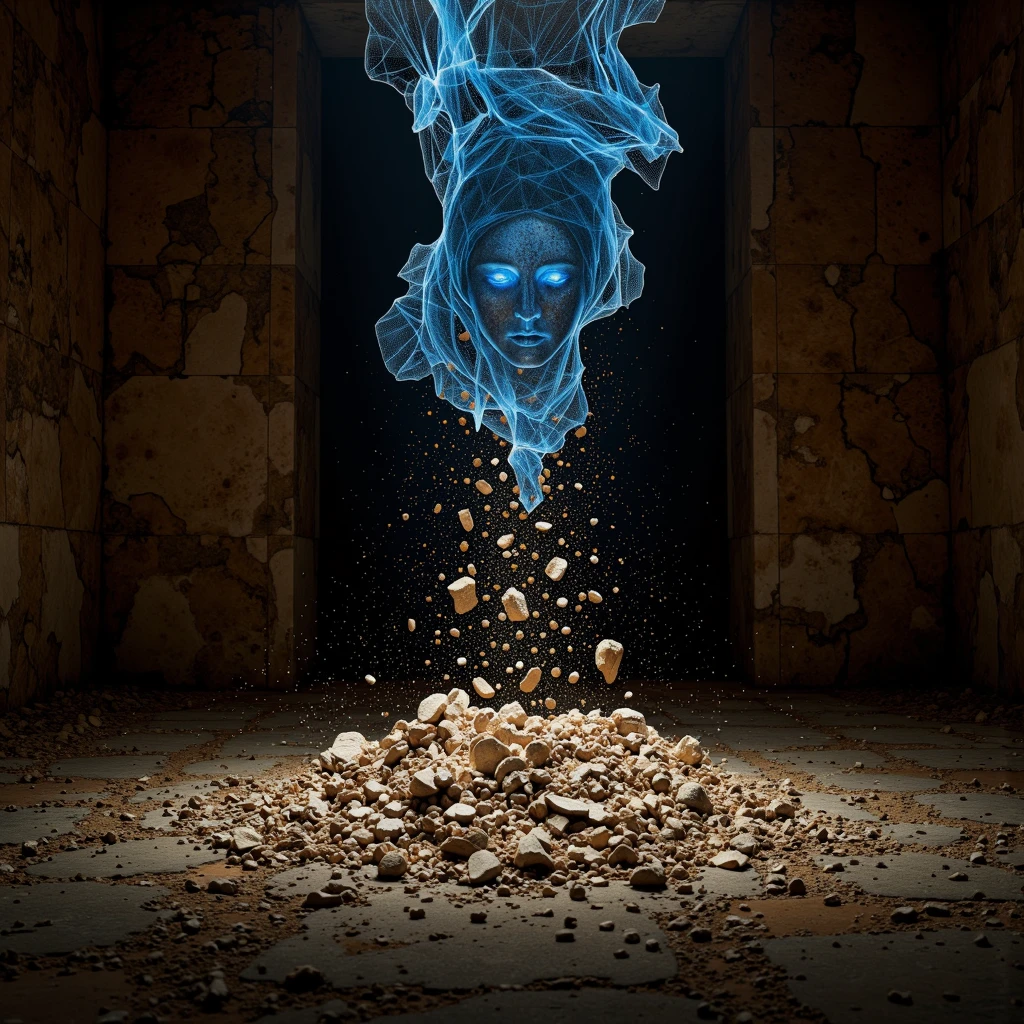
 The challenge between destruction and preservation of artistic heritage has found an unexpected ally: artificial intelligence. In 2025, we are witnessing a revolutionary phenomenon where algorithms do not limit themselves to creating art, but reconstruct it from the ashes. The emblematic case of Cimabue‘s masterpiece in the Basilica of Assisi represents a turning point in this dialogue between technology and cultural conservation.
When the earthquakes of 1997 reduced medieval frescoes by Cimabue into thousands of tiny fragments (Source 1), it seemed that some works were lost forever. Today, thanks to artificial intelligence, these fragments are virtually reassembled, offering a second life to works that would otherwise have remained only in art history books.
AI as a Tool for Collective Memory
The digital reconstruction project of Cimabue’s frescoes highlights how artificial intelligence is redefining the boundaries of artistic conservation. It is no longer just about preserving what exists, but about recovering what has been lost.
This phenomenon finds interesting parallels in other similar situations. In Mexico City, 1950s modernist mosaics, damaged by an earthquake and currently in storage, await an uncertain future (Source 5). Technology could offer not only a way to digitally catalog and preserve these works, but also to plan their physical restoration.
Indeed, the evolution of tools like Google Gemini Live (Source 3) demonstrates how AI is becoming increasingly versatile, capable of analyzing images, comparing artistic styles, and even suggesting restoration approaches based on vast databases of similar works.
Virtual Reality: From Consumption to Conservation
The reconstruction of artistic heritage intertwines with the evolution of immersive technologies. Advances in headsets like Quest, PlayStation VR2, and Apple Vision Pro (Source 2) open unprecedented scenarios for the enjoyment of digitally reconstructed art.
Let’s imagine being able to walk virtually in the pre-earthquake Basilica of Assisi, observing Cimabue’s frescoes in their original location and medieval splendor. These immersive experiences represent not only an entertainment opportunity but a powerful educational tool and a means of preserving cultural memory.
However, this digitization raises fundamental questions: to what extent can a virtual reconstruction replace the experience of the original work? Can the textures, the imperfections, the aura of the authentic work truly be replicated?
The Dialogue Between Past and Future: Emblematic Cases
The case of Brigitte Bardot, who recently passed away at 91 and was immortalized in the works of Andy Warhol and Gerald Laing (Source 4), reminds us how art has always had the function of preserving and reinterpreting cultural icons. Today, AI could analyze all artistic representations of Bardot to create a sort of digital meta-portrait that captures her essence through diverse artistic interpretations.
Similarly, the Mexican modernist mosaics (Source 5) represent a cultural heritage that risks disappearing not only physically, but also from collective memory. Technology offers the possibility of documenting, cataloging, and virtually reconstructing these masterpieces, creating a globally accessible digital archive.
Artificial intelligence is therefore emerging as a mediator between past and future, capable of preserving cultural memory even when physical supports are compromised or destroyed.
The Ethical Limits of Algorithmic Reconstruction
The reconstruction of Cimabue’s frescoes raises significant ethical questions. When an algorithm reassembles fragments and fills in gaps, how much of the resulting work belongs to the original artist and how much to the machine’s interpretation?
Google Gemini Live (Source 3) and other generative AI tools demonstrate increasingly sophisticated capabilities to interpret and generate visual content based on historical references. But this capability must be guided by philological rigor and methodological transparency.
It is fundamental that digital reconstructions be clearly identified as such, distinguishing between original elements, relocated fragments, and algorithmically reconstructed areas. Transparency thus becomes an essential ethical requirement in this new paradigm of artistic conservation.
Furthermore, immersive technologies (Source 2) must be used not to replace, but to complement the experience of original works, offering contexts, information, and perspectives otherwise inaccessible.
In conclusion, artificial intelligence is redefining the very concept of artistic conservation, transforming it from a primarily physical practice to a hybrid process, where digital and material collaborate to preserve our cultural heritage. The challenge for the future will be to balance technological possibilities with philological respect and the authenticity of the artistic experience.
References:
- AI helps to reconstruct Cimabue basilica masterpiece shattered by earthquakes
- Our Favorite Quest, PC VR, PS VR2 & Apple Vision Pro Games Of 2025
- 3 New Tricks to Try With Google Gemini Live After Its Latest Major Upgrade
- And God Created Artists: Brigitte Bardot caught on canvas
- Mexico City’s giant Modernist mosaics face uncertain future
This essay was generated using an artificial intelligence workflow designed and supervised by Enzo Gentile. The sources were selected and analyzed automatically, and the final text underwent critical revision before publication.