
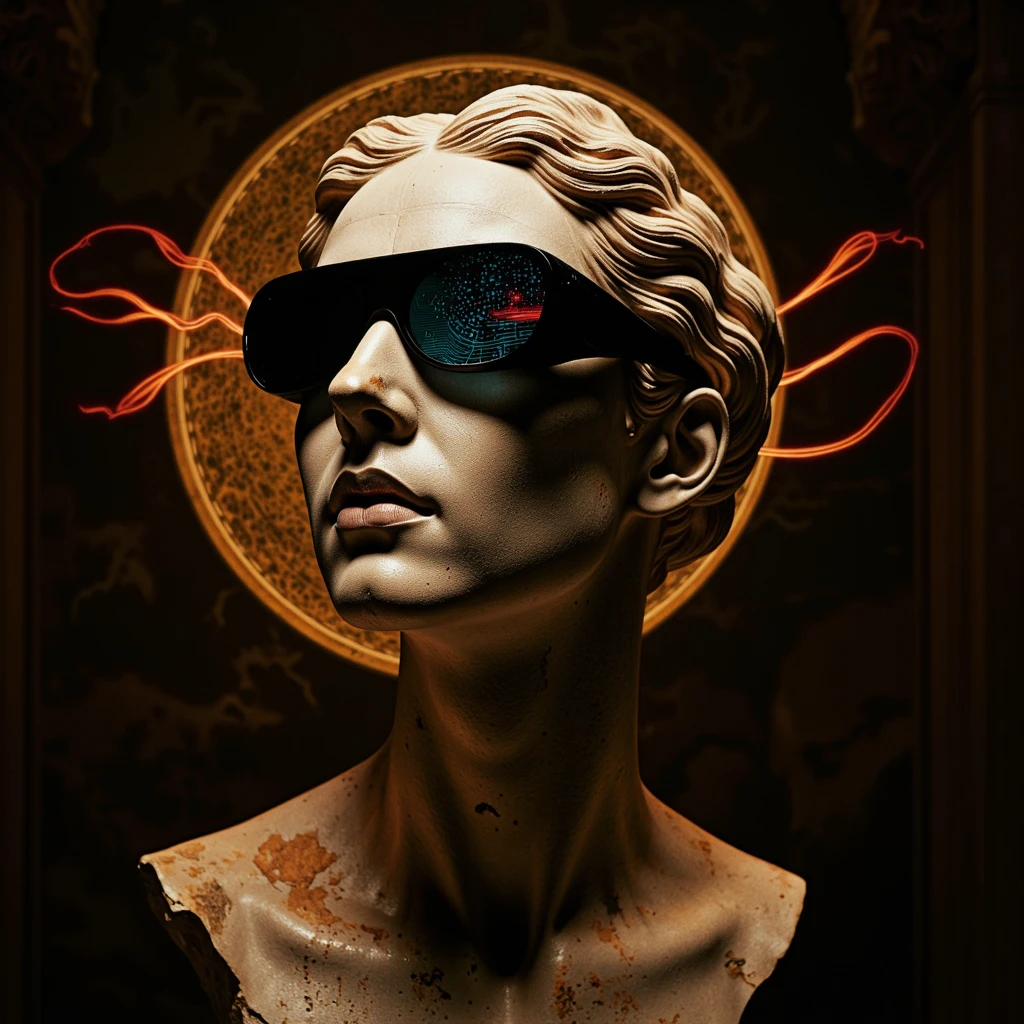
 When the experimental music of FKA Twigs resonates in a Vatican pavilion while Meta is accused of turning its users into potential predators, we understand just how complex the relationship between art, technology, and society has become. These apparent contradictions reveal a historical moment in which the sacred and the profane, memory and the future, creative freedom and digital control intertwine in unexpected ways.
Contemporary art today finds itself at the center of a paradox: on one hand, it celebrates spirituality and identity through innovative expressive forms; on the other, it must confront the ethical implications of the technologies it uses. This tension defines the cultural moment we are living in, where technological innovation advances at breakneck speed while traditional institutions seek new ways to remain relevant.
Spirituality and Sound: A Bridge Between Tradition and Innovation
The Vatican’s presence at the 2026 Venice Biennale represents a significant attempt at dialogue between religious tradition and contemporary art. As highlighted in Source 1, the Holy See’s pavilion will host artists such as FKA Twigs and Brian Eno, emblematic figures of contemporary sound experimentation, to honor the legacy of St. Hildegard of Bingen, a 12th-century Benedictine nun.
This curatorial choice reveals a precise strategy: using contemporary artistic language to actualize a millennial spiritual heritage. The figure of Hildegard, a medieval mystic known for her visionary musical compositions, thus becomes a temporal bridge connecting ancient devotional practices with the sonic avant-garde of our time.
Sound, in this context, is not merely an artistic medium but becomes an instrument of transcendence and spiritual connection. Brian Eno, a pioneer of ambient music, and FKA Twigs, an artist who blends experimental R&B with elaborate visual performances, bring contemporary approaches to a tradition of using sound as a portal to the mystical experience.
In parallel, the major retrospective on Marcel Duchamp at MoMA (Source 8) reminds us how 20th-century art has constantly challenged the boundaries between the sacred and the profane. The works of Duchamp, along with those of Dorothea Tanning and Leonora Carrington, explored dreamlike and spiritual dimensions through a revolutionary visual language, anticipating many of the issues we face today in the relationship between art and technology.
Authenticity and Memory in the Digital Age
The publication of the Modigliani catalogue raisonné curated by Marc Restellini (Source 2) raises crucial questions about authenticity in the age of digital reproducibility. This monumental work of authentication, described as an “atom bomb” in the art world, led to the inclusion of 100 new works in the artist’s corpus, but also the exclusion of 15 previously attributed works.
This process of critical revision highlights how complex it is to establish authenticity in an era where technology allows for perfect reproductions and sophisticated manipulations of artworks. The question of the original takes on new dimensions when we consider how XR (Extended Reality) technologies are redefining the very concept of the artistic experience.
As reported in Source 4, the new features of Android XR allow for the auto-spatialization of 2D applications, creating immersive environments that radically transform the way we consume digital content. This technological evolution poses fundamental questions: what does “original” mean in an augmented reality context? How does the value of a work change when it can be experienced in multiple and personalized forms?
The exhibition “Un/Settled Futurities: Diasporic Re/Imaginaries” (Source 3) directly addresses these issues, exploring how diasporic communities use memory and imagination to build identities and alternative futures. In this context, art becomes an instrument of resistance against imperial-colonial security regimes, proposing narratives that challenge official versions of history.
The Dark Side of Wearable Technology
While XR technologies offer unprecedented creative possibilities, they also raise significant ethical concerns. Source 5 reports the alarm raised by over 70 organizations, including the ACLU and EPIC, regarding the risks associated with Meta’s smart glasses equipped with facial recognition. These devices could become tools in the hands of sexual predators, endangering abuse survivors, immigrants, and LGBTQ+ individuals.
This controversy highlights the tension between technological innovation and privacy protection. Smart glasses, which promise to revolutionize the way we interact with our surroundings, raise fundamental ethical questions about consent and surveillance. Who controls the data collected by these devices? How can we ensure they are not used for malicious purposes?
Apple, as reported in Source 7, is preparing the launch of its first smart glasses with various stylistic variants and a distinctive camera lens shape. This entry of a tech giant into the smart glasses market marks a potential turning point for the mass adoption of these technologies, making an ethical debate on their implications even more urgent.
The upcoming AWE USA 2026 event (Source 6) represents an important opportunity for the XR industry to address these issues. As a “must-go event” for the sector, this conference could become a crucial forum for developing shared ethical guidelines that balance technological innovation and social responsibility.
Towards a Possible Synthesis
The coexistence of artistic initiatives celebrating spirituality (like the Vatican pavilion at the Biennale) and ethical controversies over wearable technologies illustrates the complexity of the cultural moment we are passing through. Contemporary art, in this context, assumes a fundamental role of mediation and critique.
Artistic practices using XR technologies can indeed propose alternative modes of use, prioritizing creative expression and human connection over surveillance and control. The example of the exhibition “Un/Settled Futurities” (Source 3) demonstrates how art can use new technologies to give voice to marginalized communities and propose alternative visions of the future.
At the same time, initiatives like the Vatican pavilion at the Biennale (Source 1) suggest that traditional institutions can also embrace contemporary artistic languages to renew their message and reach new audiences. The figure of St. Hildegard of Bingen, reinterpreted through the prism of contemporary experimental music, thus becomes a symbol of possible dialogue between tradition and innovation.
In conclusion, the contemporary artistic landscape invites us to overcome the easy polarizations between technophilia and technophobia, between tradition and innovation. The challenge lies in developing a critical approach that recognizes both the creative potential of new technologies and their associated ethical risks, promoting a conscious and responsible use of these tools.
Art, in this complex scenario, maintains its essential function as a space for reflection and experimentation, where it is possible to imagine alternative ways of relating to technology, based on values of empathy, respect, and shared creativity.
References:
- FKA Twigs and Brian Eno among artists included in the Vatican’s sound-based 2026 Venice Biennale pavilion
- Marc Restellini’s ‘atom bomb’ of a Modigliani catalogue raisonné is finally published
- Un/Settled Futurities: Diasporic Re/Imaginaries
- The XR Week Peek (2026.04.13): Android XR adds autospatialization of 2D apps, Meta announces new AI for glasses, and more!
- Meta Is Warned That Facial Recognition Glasses Will Arm Sexual Predators
- What Makes AWE USA the ‘Must-go’ Event For the XR Industry
- Apple Reportedly Preparing Several Styles of Smart Glasses with Distinct Camera Lens
- Marcel Duchamp at MoMA, Dorothea Tanning book, Leonora Carrington at the Freud Museum, London—podcast
This essay was generated using an artificial intelligence workflow designed and supervised by Enzo Gentile. The sources were automatically selected and analyzed, and the final text was critically reviewed before publication.