
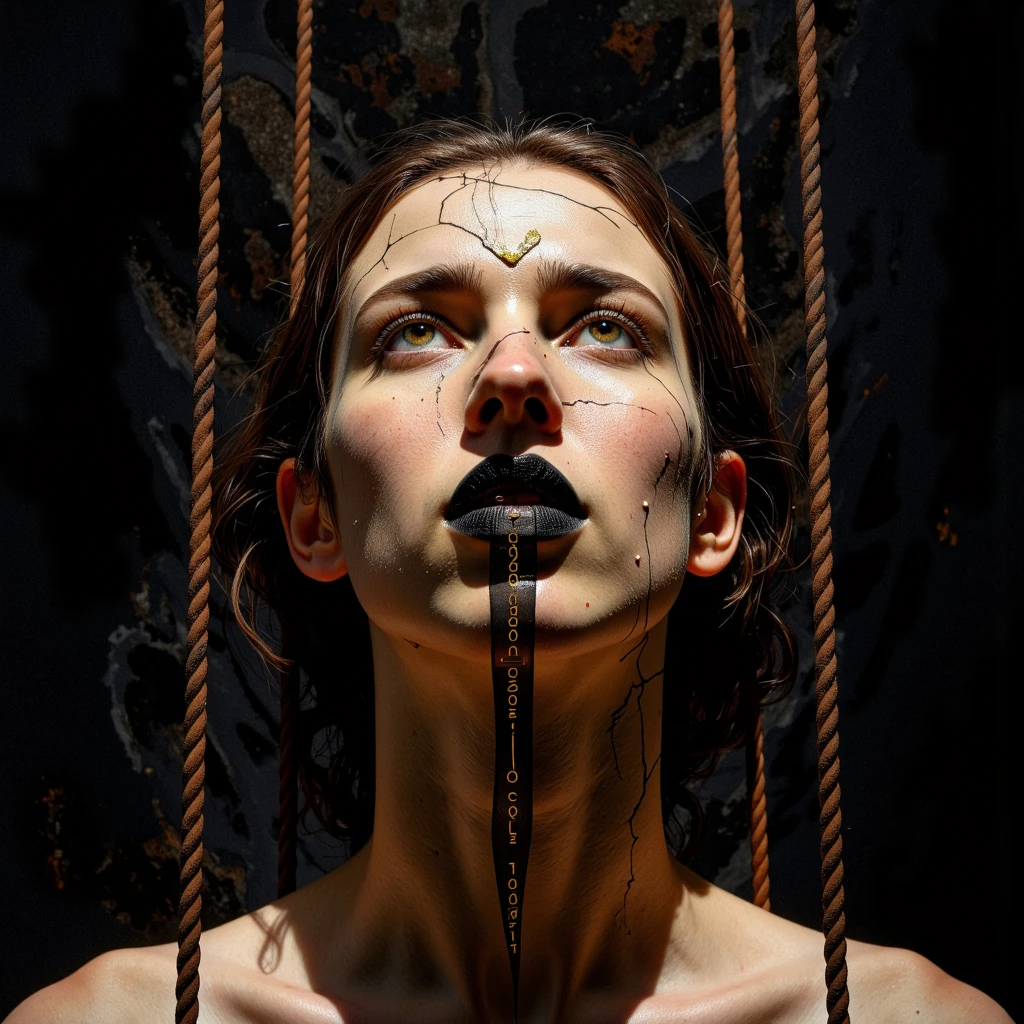
 Fourteen million dollars for an Ecce Homo, a sculpture suspended from a crane as a metaphor for precariousness, algorithms that promise to save humanity from the very technology that created them. The world of contemporary art finds itself in a fascinating paradox: while it rediscovers and values its past, it projects itself towards a future of digital innovation that redefines its boundaries.
This dualism between conservation and innovation represents the creative tension that fuels the global art scene today. On the one hand, we witness a renewed interest in old masters, with auction records and state acquisitions; on the other, we see the emergence of residencies for digital artists and new expressive forms that use cutting-edge technologies. In this complex scenario, art continues to perform its function as a mirror of society, reflecting both our cultural roots and our anxieties about the technological future.
The Return to the Masters: A Renaissance of the Classic in the Digital Age
The acquisition of the Ecce Homo by Antonello da Messina by the Italian Ministry of Culture represents an emblematic case of this trend. For 14.9 million dollars, the Italian State brought back home a masterpiece that had been auctioned at Sotheby’s in New York (Source 3). This significant investment demonstrates how, in the era of digital reproducibility, the value of the original work not only resists but is strengthened.
In parallel, Old Masters auctions in New York recorded impressive results, with works by Artemisia Gentileschi, Michelangelo, and Rembrandt reaching record prices (Source 5). This phenomenon highlights a renewed interest in classical art in an era dominated by the digital, almost as if to affirm the persistence of aesthetic and cultural values that transcend trends.
The rediscovery of the masters is not limited to the market but also involves research and conservation. The case of the painting “Poplars near Nuenen” by Van Gogh is illuminating: thanks to modern analysis technologies, it was possible to discover that it is a “triple painting,” with two compositions hidden beneath the visible surface (Source 7). This example demonstrates how technology can be an ally of conservation, revealing layers of creativity previously inaccessible.
Art as Resistance: Political Expression in the Era of Digital Censorship
In contrast to the rediscovery of the classic, we find contemporary artists using art as a tool of political resistance. The Ukrainian pavilion at the next Venice Biennale will present a sculpture suspended from a crane, evacuated from the Russian front line, as a powerful visual metaphor for the country’s precariousness during the conflict (Source 4). The work transforms an experience of war into a universal artistic language, demonstrating art’s ability to communicate beyond linguistic and cultural barriers.
The story of Ai Weiwei also raises fundamental questions about the role of art in contemporary society. The Chinese artist, about to publish the volume “On Censorship,” denounced having suffered pressure from the Royal Academy after a tweet of his (Source 2). This episode reignites the debate on censorship in Western art institutions, highlighting how mechanisms of control of artistic expression are not exclusive to authoritarian regimes.
The tension between freedom of expression and institutional control also manifests itself in the digital world, where technological platforms exercise more subtle but no less effective forms of censorship. In this context, digital art can become a tool of resistance, creating spaces of expressive freedom outside traditional circuits.
Artificial Intelligence: From Tool to Creative Collaborator
The DAIR (Digital Artist in Residence) program promoted by the Digital Center – ARCHiVe of the Giorgio Cini Foundation represents a bridge between tradition and innovation. This digital residency on the island of San Giorgio Maggiore invites artists to explore the creative potential of new technologies in a highly prestigious historical and cultural context (Source 1). The initiative demonstrates how traditional cultural institutions are embracing digital innovation, recognizing its artistic potential.
While artists explore the creative possibilities offered by technology, profound questions emerge about the future of artificial intelligence. As highlighted by the resident philosopher at Anthropic, the company is betting on the ability of its Claude system to learn the wisdom necessary to avoid future disasters (Source 6). This vision raises fundamental questions about the relationship between humans and machines in the creative process: can an artificial intelligence develop a form of aesthetic and ethical wisdom?
Apple’s acquisition of the startup Q.ai, specialized in converting “silent speech” into text, opens further scenarios for interaction between humans and technology (Source 8). This technology, potentially crucial for future AR glasses, could revolutionize how we interact with digital art, allowing forms of intimate communication and personal engagement with works.
Conclusion: Towards a New Digital Humanism
The tension between conservation and innovation that characterizes the contemporary art landscape is not necessarily a conflict but can represent an opportunity for a new digital humanism. Art, in its ability to adapt and reinvent itself, can serve as a bridge between our cultural heritage and the challenges of the technological future.
Cultural institutions have a crucial role in this process: they must protect and enhance artistic heritage, as demonstrated by the acquisition of the Ecce Homo, but also embrace innovation, as in the case of the digital residency of the Cini Foundation. At the same time, contemporary artists continue to use art as a tool of resistance and critical reflection, both through traditional and digital means.
Ultimately, the value of art lies in its ability to connect the human with the human, regardless of the medium used. Whether it is a 15th-century painting or a work created with artificial intelligence, art continues to perform its essential function: helping us understand who we are and imagine who we might become.
References:
- A Digital Residency on the Island of San Giorgio Maggiore: Applications Open
- Ai Weiwei, Western Dictatorship and Pressures Suffered at the Royal Academy
- The Ministry of Culture Acquires Antonello da Messina’s Ecce Homo at Sotheby’s Auction
- Dangling sculpture—’evacuated’ from Russian frontline—will be focus of Ukraine’s pavilion at Venice Biennale
- Artemisia Gentileschi, Michelangelo and Rembrandt bring new energy and records to New York’s Old Masters sales
- The Only Thing Standing Between Humanity and AI Apocalypse Is … Claude?
- Van Gogh’s ‘triple painting’ revealed by discoveries beneath the surface
- Apple Acquired “Silent Speech” Startup Q.ai
This essay was generated using an artificial intelligence workflow designed and supervised by Enzo Gentile. The sources were automatically selected and analyzed, and the final text was critically reviewed before publication.