
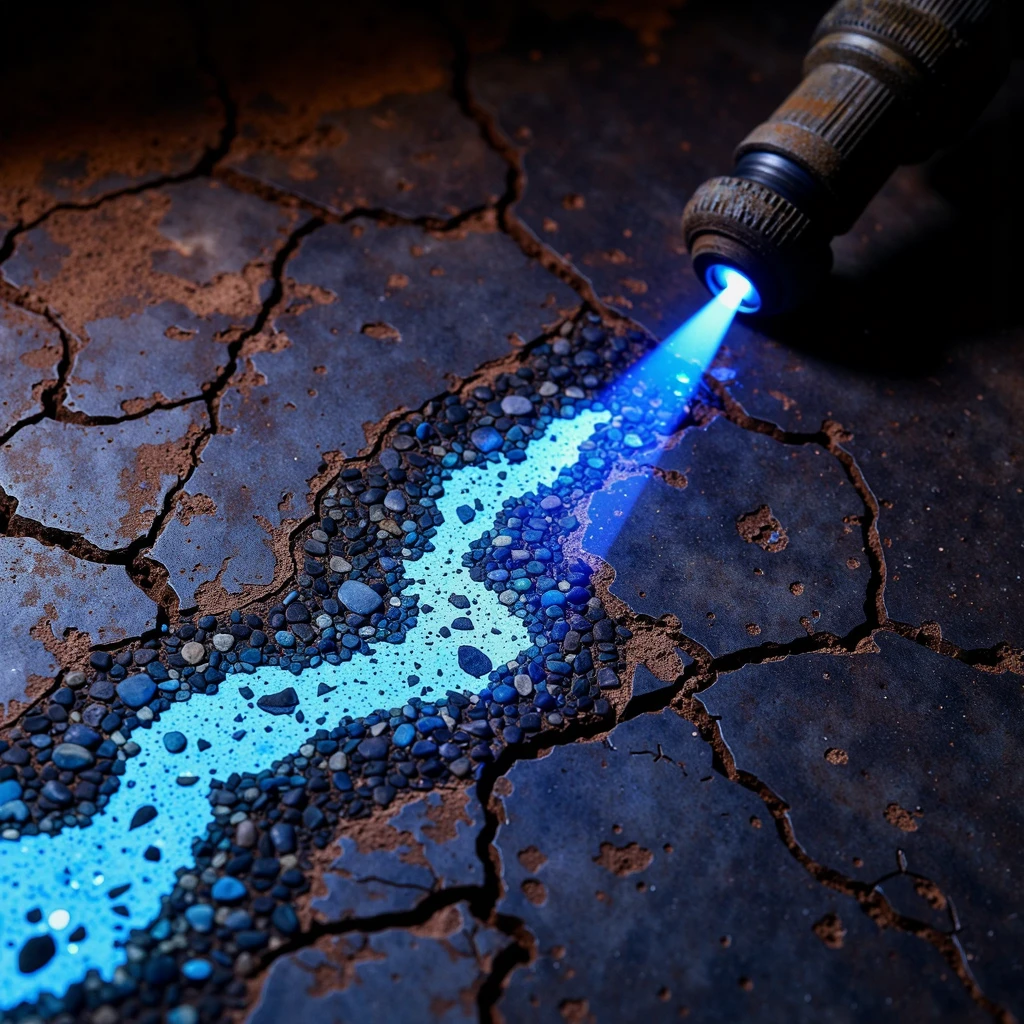
 Technology is merging seemingly irreconcilable dimensions: the most precious artistic past and the most futuristic digital future. Virtual museums generated by artificial intelligence, ecological immersive installations, and laser conservation techniques are redefining our relationship with cultural heritage. This convergence does not simply represent a technological evolution, but a radical rethinking of the spaces—physical and virtual—where art is created, preserved, and experienced.
The frontiers of this transformation are expanding rapidly, with Google DeepMind recently releasing an experimental version of Genie 3, an AI system capable of generating real-time interactive virtual environments (Source 1). In parallel, Meta reiterated its commitment to VR headset development during its last quarterly call (Source 3), confirming that virtual reality remains a strategic investment field despite rumors of a supposed decline in the sector.
In this essay, we will explore how these technologies are transforming the artistic experience, analyzing innovative projects that blend traditional conservation and digital fruition, and we will reflect on the implications for the future of museums and exhibition spaces.
Generated Worlds: AI as a New Artistic Medium
Google DeepMind has taken a significant step with Genie 3, a system capable of creating interactive virtual environments in real-time. This technology, now available as an experimental prototype for Google AI subscribers, represents a preview of how we might soon generate entire VR worlds instantly (Source 1).
Google’s approach stands out for its ability to transform artificial intelligence from a tool into an autonomous creative medium, capable of interpreting and developing explorable spaces based on simple inputs.
In parallel, the installation “Fossilized Futures” by Marco Barotti and Robertina Šebjanič, presented in Bologna, demonstrates how AI can be used to create ecologically aware artistic experiences. This project integrates art, scientific research, and artificial intelligence to offer an immersive experience dedicated to European river landscapes (Source 2).
The installation invites the public to enter a “stratified temporality of the river,” where past, present, and possible futures coexist as sensitive traces. This multi-temporal approach resonates with the very nature of generative AI, which operates by synthesizing historical data to project new possibilities.
Virtual Museums: Redefining the Educational Experience
The D-Day VR Museum on Steam represents an exemplary case of how virtual reality can transform historical education. This PC VR experience uses advanced audiovisual tools to make learning about one of the most crucial events in modern history engaging (Source 5).
The approach of the D-Day VR Museum demonstrates how the virtualization of museum spaces is not simply a digital replica of the physical experience, but its reinvention, capable of offering perspectives otherwise impossible.
The entertainment industry is also contributing to this evolution. Indie studio Pixelity confirmed the development of a VR game based on the cult 90s anime “Neon Genesis Evangelion,” with a demo scheduled for the series’ 30th anniversary (Source 6). This project highlights how the boundaries between museums, games, and art are becoming increasingly blurred in the virtual context.
The value of these virtual experiences lies in their ability to democratize access to artworks and historical moments, making it possible for anyone, regardless of geographical location, to explore significant cultural heritages.
Innovative Conservation: Technology in the Service of Tradition
While new virtual spaces are being created, cutting-edge technologies are being employed to preserve existing artistic heritage. The laser cleaning of the Rosalinde and Arthur Gilbert collection at the V&A Museum represents an illuminating example of how advanced technologies can reveal the “hidden beauty” of historical works like micromosaics (Source 4).
This conservation technique uses the precision of laser light to remove layers of dirt and deterioration without damaging the original substrate, allowing for the rediscovery of details previously obscured by time.
The parallel with Sotheby’s Old Masters auction in New York, featuring masterpieces by Rembrandt and Antonello da Messina (Source 7), highlights the continued relevance of classical art in the contemporary market, despite—or perhaps thanks to—the technological evolution of conservation and valorization methods.
The convergence between traditional conservation and technological innovation finds further expression in the Lawh Wa Qalam museum dedicated to M.F Husain in Doha. This building, based on a sketch by the artist himself and translated into functional architecture by architect Martand Khosla, represents a bridge between the original artistic vision and its physical realization through contemporary technologies (Source 8).
Hybrid Future: Towards a New Ecology of Artistic Spaces
The convergent evolution of generative AI, virtual reality, and advanced conservation techniques is creating a hybrid artistic ecosystem, where physical and virtual are no longer separate dimensions but interconnected.
Meta, with its renewed commitment to VR headset development (Source 3), and Google, with the Genie project (Source 1), are building the technological infrastructures that will make this hybridization increasingly accessible and sophisticated.
The installation “Fossilized Futures” (Source 2) perhaps represents the most emblematic example of this convergence: a work that uses AI not only as a technical tool but as a creative partner to explore multiple temporalities and complex ecological relationships.
This approach opens unprecedented possibilities for artists, curators, and cultural institutions, allowing for the creation of experiences that transcend traditional physical and temporal limits.
The ongoing transformation concerns not only technology but also democratic accessibility to art and culture. Projects like the D-Day VR Museum (Source 5) make immersive educational experiences available to a global audience, overcoming geographical and economic barriers.
In conclusion, we are witnessing the birth of a new ecology of artistic spaces, where conservation and innovation, physical and virtual, past and future coexist in a continuous and productive dialogue. This convergence does not replace the experience of traditional art but enriches and expands it, offering new modes of creation, preservation, and fruition of human cultural heritage.
References:
- Google’s Project Genie Makes Real-time Explorable Virtual Worlds, Offering a Peek Into VR’s Future
- Inaugurazione di Fossilized Futures
- The XR Week Peek (2026.02.02): Meta confirms the work on new headsets, Google Genie builds worlds with AI, and more!
- Laser cleaning of the Rosalinde and Arthur Gilbert collection
- D-Day VR Museum On Steam Is An Entertaining Educational Exhibition
- ‘Neon Genesis Evangelion’ VR Game is Still Coming, Demo Debuting at 30th Anniversary Next Month
- Rembrandt e Antonello da Messina guidano l’asta Old Masters di Sotheby’s a New York
- How an artist’s sketch was turned into a museum
This essay was generated using an artificial intelligence workflow designed and supervised by Enzo Gentile. The sources were automatically selected and analyzed, and the final text was critically reviewed before publication.