
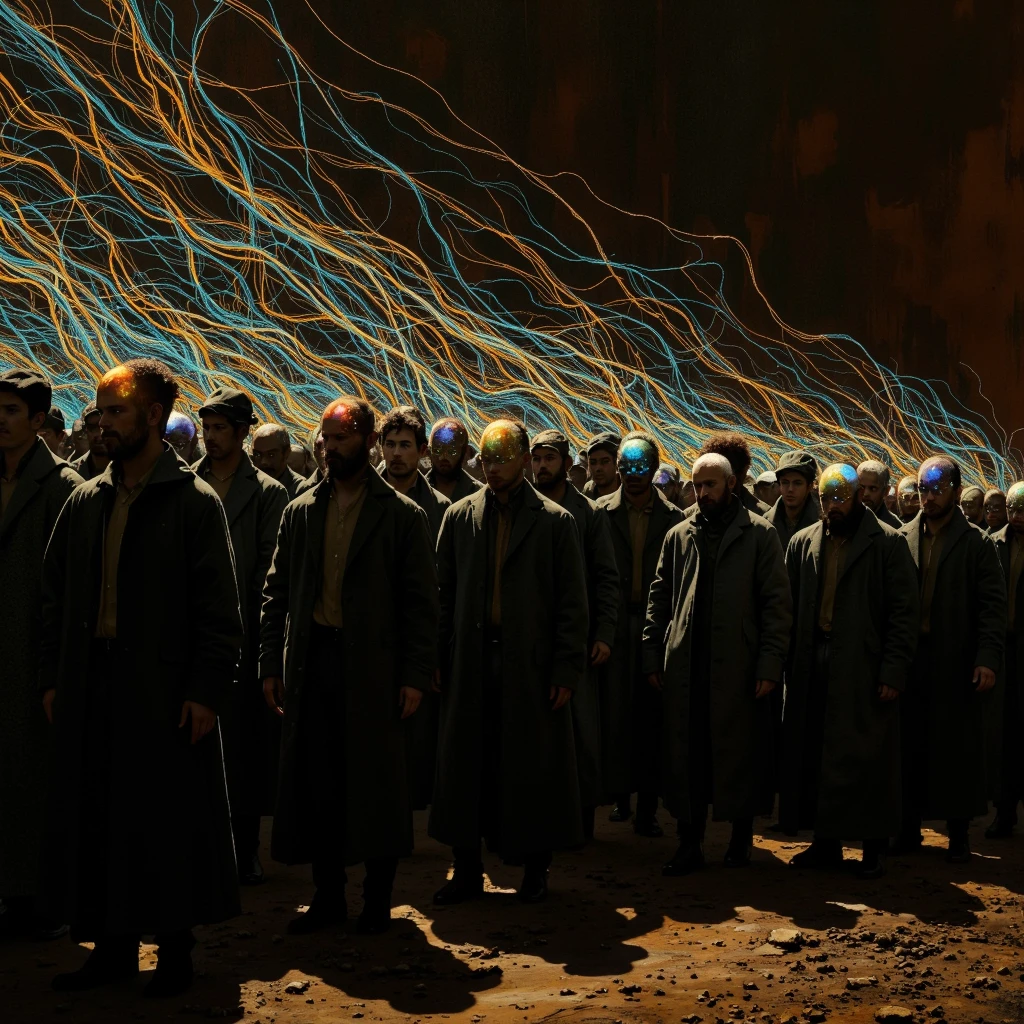
 Mind-reading ultrasound, revolutionary artists building collective identities, and legal battles for the control of immersive technologies. We are at the dawn of an era where the barriers between the human brain and machine are thinning, while the art world continues to explore the power of the image as a tool for social change. This convergence is not accidental: it represents a crucial moment in which technology and art mutually question the future of human perception.
Merge Labs, Sam Altman’s startup recently emerging from stealth mode with $252 million in funding (Source 1), proposes a brain-machine interface based on ultrasound that could revolutionize not only how we interact with technology but also how we conceive the artistic experience itself. In parallel, retrospectives of artists like Pellizza da Volpedo (Source 3) and Frida Kahlo (Source 2) remind us that art has always sought to build bridges between the individual and the collective, between the personal and the political.
The Neural Interface: When Technology Reads (and Writes) the Mind
OpenAI’s investment in the startup Merge Labs marks a turning point in the relationship between artificial intelligence and human cognition. The ultrasound technology promised by the company is not limited to reading brain activity but aims to write information directly into the brain (Source 1). This bidirectionality represents a paradigm shift compared to current human-machine interfaces.
Simultaneously, the XR (Extended Reality) sector is undergoing a phase of profound transformation. Despite recent cuts at Meta’s Reality Labs, Oculus founder Palmer Luckey categorically rejects the idea that Meta is abandoning virtual reality (Source 4). In fact, 2025 was a significant year for the XR industry, with the launch of Android XR and the announcement of a new headset by Valve (Source 6).
However, this race for innovation is not without tension. The lawsuit filed by XREAL against VITURE for patent infringement (Source 7) highlights how competitive and strategic the AR glasses market is, especially considering XREAL’s partnership with Google. These legal conflicts reveal how high the stakes are: who will control the interfaces through which we perceive the world in the future?
Art as a Social Interface: Building Collective Identities
While technology seeks new ways to connect to the human brain, art continues to function as a social interface, capable of articulating collective identities and alternative visions of reality. The exhibition dedicated to Pellizza da Volpedo at the Gallery of Modern Art in Milan (Source 3) reminds us how “The Fourth Estate” (Il Quarto Stato) became a visual icon of the workers’ movement, demonstrating the power of the image in building a collective consciousness.
Similarly, the upcoming exhibition on Frida Kahlo at Tate Modern will explore not only her famous self-portraits but also her impact on female artists in Mexico, the Americas, and Europe (Source 2). Kahlo transformed the personal into the political, using her own body as an interface to explore issues of identity, gender, and colonialism.
The recent passing of Beatriz González, a fundamental figure in 20th-century Latin American art (Source 5), also reminds us of the crucial role of artists as educators and mentors, capable of shaping not only their own artistic production but also the cultural institutions of their country. González influenced the direction of post-war painting and contributed to shaping Colombian museums as a curator and educator.
Looking to the future, the solo exhibition of Ghanaian artist Amoako Boafo at Palazzo Grimani during the 2026 Venice Biennale (Source 8) represents further testimony to how contemporary art continues to expand and redefine dominant cultural narratives.
Towards a New Symbiosis Between Art and Technology
Neural interfaces like those developed by Merge Labs could radically transform the artistic experience. Imagine a future where a work of art can communicate directly with our brain, bypassing traditional sensory channels. Or where artists can create not only by manipulating physical or digital matter but by intervening directly in cognitive processes.
This scenario raises fundamental ethical questions: who controls these interfaces? Which narratives will be privileged? How will the very concept of artistic authorship change?
The legal battle between XREAL and VITURE (Source 7) anticipates the conflicts that could emerge in this field. It is not simply about intellectual property, but about the control of the tools that will mediate our perception of reality.
At the same time, the retrospectives of artists like Pellizza da Volpedo, Frida Kahlo, and Beatriz González remind us that art has always sought to act as an interface between the individual and society, between the personal and the political. Technology only amplifies and complicates this fundamental function.
Conclusion: Art as a Critical Interface
As we approach an era where neural interfaces could redefine the relationship between mind and machine, art maintains a crucial role as a critical interface, capable of questioning and problematizing these transformations.
The works of artists like Kahlo, González, and Pellizza da Volpedo remind us that every interface—whether a painting, a sculpture, or a technological device—is never neutral but embodies worldviews, power relations, and possibilities for resistance.
In this context, the dialogue between art and technology becomes essential. It is not simply about using new technological tools to create art, but about thinking critically about how these technologies are redefining our experience of the world and our social relationships.
Neural interfaces, extended reality, and artificial intelligence are not just technological innovations but potential tools for rethinking art itself. At the same time, art can and must serve as a critical space to question these technologies, explore their ethical implications, and imagine alternative uses.
In this reciprocal dialogue between art and technology, a significant part of our collective future is at stake: not only how we will perceive the world, but also how we will imagine and transform it.
References:
- OpenAI Invests in Sam Altman’s New Brain-Tech Startup Merge Labs
- Self-portraits, Surrealism and sanitary pads: what to expect from Tate Modern’s Frida Kahlo show
- Inside The Fourth Estate: Pellizza da Volpedo and the construction of a collective image
- Oculus Founder on Meta Cuts: “The ‘Meta abandoning VR narrative’ is obviously false”
- Beatriz González, indefatigable force in Colombian art, has died, aged 93
- XR Year in Review: The Most Important Stories of 2025 and What They Mean for 2026
- Google’s Leading AR Glasses Partner XREAL Files Patent Lawsuit Against VITURE
- Amoako Boafo solo exhibition to open in Venice during 2026 Biennale
This essay was generated using an artificial intelligence workflow designed and supervised by Enzo Gentile. The sources were automatically selected and analyzed, and the final text was critically reviewed before publication.