
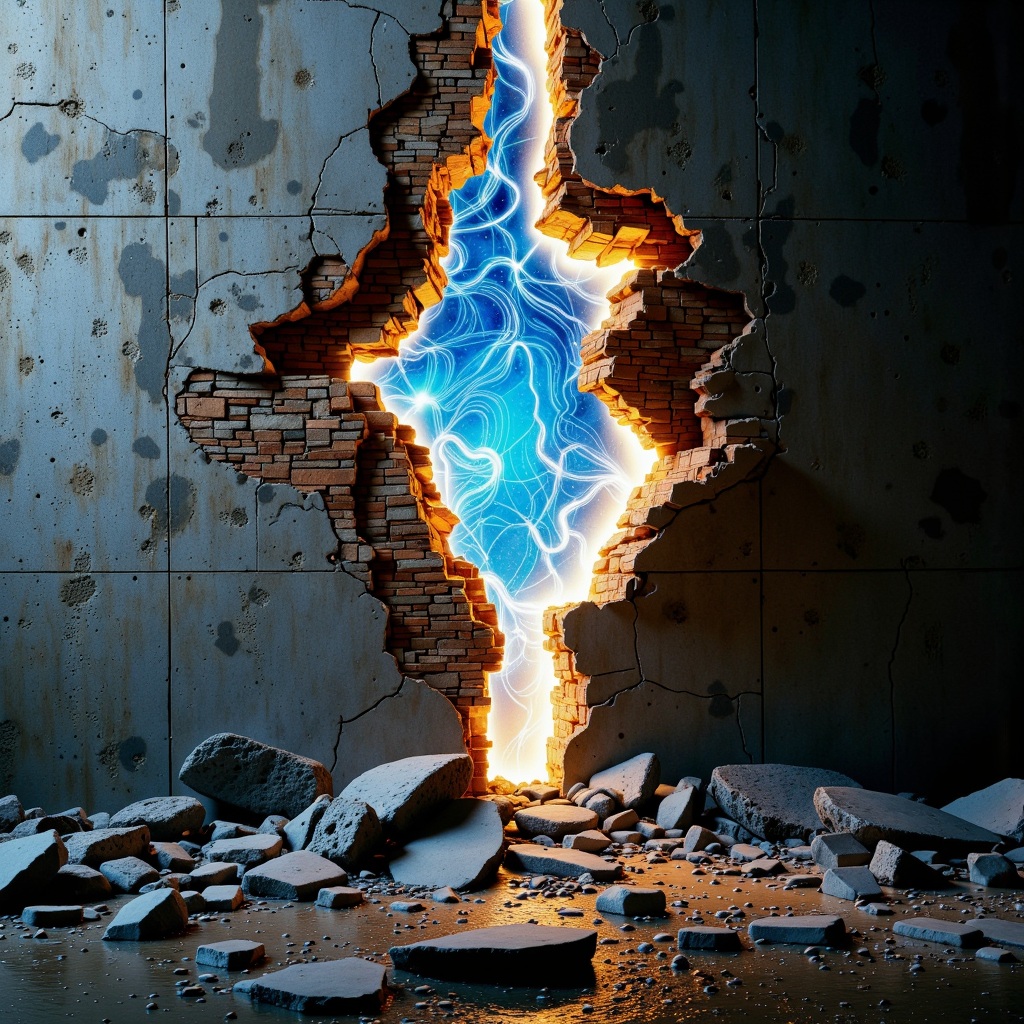
 The walls between the physical and the digital are crumbling, but not due to structural weakness. It is a deliberate act of creative demolition. As artist collectives transform entire neighborhoods into living canvases and traditional museums radically rethink their exhibition spaces, we are witnessing a quiet but profound revolution in how art is created, shared, and experienced.
This transformation is not simply a matter of new technological tools; it represents a fundamental rethinking of the relationship between art, space, and the public. Technological convergence is redefining what it means to create and experience art in the twenty-first century, breaking down physical and conceptual barriers that seemed immovable just a decade ago.
The Expansion of Artistic Spaces: From Museum to Street
The MAHKU collective recently completed what is considered the largest mural in Brazil in Minas Gerais. This monumental project does not merely decorate a surface—it transforms about 100 homes into a gigantic environmental canvas, creating a living artistic space pulsating with community relationships (Source 6).
This expansive approach to public art represents an important conceptual evolution. It is no longer about inserting artworks into predefined spaces, but about redefining entire environments as collective and participatory works of art.
In parallel, within the institutional context, the Metropolitan Museum is revolutionizing its exhibition spaces with the new Condé M. Nast Galleries. This change will bring fashion—traditionally relegated to the museum’s basement—into a central and prominent position (Source 8).
Art fairs are also rethinking their traditional formats. Art Basel Hong Kong has announced a new section dedicated exclusively to works created in the last five years, signaling a growing attention to the most recent contemporary art and its intersections with new technologies (Source 5).
Technology as Medium and Message
Artificial intelligence is redefining the boundaries of artistic creativity. New forms of hybrid art combining three-dimensional papercraft elements with AI-generated drawn details create works that literally seem to leap off the page with surprising movement, texture, and three-dimensional depth (Source 1).
These experiments are not simple technical curiosities but represent a significant evolution in contemporary visual language, where the boundaries between analog and digital dissolve in favor of entirely new aesthetic experiences.
Google’s launch of Gemini 3 represents a further step in this direction. With advanced capabilities in reasoning, video generation, and code writing, these technologies are opening up creative possibilities previously unimaginable (Source 3).
Simultaneously, in the world of augmented reality, Rokid has launched a new generation of smart glasses in China in collaboration with the eyewear brand Bolon. These devices promise to integrate digital experiences into physical space in increasingly sophisticated and natural ways (Source 7).
Streaming and Sustainability: New Dimensions of the Artistic Experience
The blockchain platform Tezos is pushing towards live streaming as a new paradigm for the digital art movement. This evolution represents not only a technological shift but a fundamental transformation in how digital art is shared, experienced, and commercialized (Source 2).
Streaming introduces an element of shared temporality into the digital art experience, creating collective moments that transcend geographical and institutional limitations.
Parallel to these innovations, there is a growing awareness of the environmental impact of contemporary artistic practices. The climate report from the PST Art program by Getty urges cultural organizations to confront the environmental impact of their exhibitions (Source 4).
This represents a significant step towards greater environmental sustainability in art world activities, recognizing that technological innovation must go hand in hand with ecological responsibility.
Towards an Integrated Artistic Ecosystem
What emerges from the analysis of these diverse trends is the evolution towards a more integrated and fluid artistic ecosystem, where traditional distinctions between physical and digital, public and private, institutional and grassroots become increasingly irrelevant.
New AI technologies like Gemini 3 (Source 3) are not simply tools for artistic creation, but are redefining the creative processes themselves, introducing new forms of collaboration between humans and machines.
At the same time, initiatives like the MAHKU community mural (Source 6) demonstrate how art can act as a catalyst for social transformation and urban regeneration, creating shared spaces of meaning and belonging.
In this context, the growing attention to environmental sustainability in artistic practices (Source 4) represents not only an ethical necessity but also an opportunity to radically rethink the production and distribution models of contemporary art.
The convergence of these diverse trends is creating a more democratic, accessible, and interconnected artistic landscape, where traditional barriers to access and participation are progressively eroded.
Conclusion
The ongoing transformation in the art world is not simply about adopting new technologies or experimenting with new exhibition formats. Rather, it is a fundamental rethinking of what it means to create, share, and experience art in the twenty-first century.
From AI generating hybrids between papercraft and drawing (Source 1) to AR glasses overlaying digital layers onto physical reality (Source 7), from blockchains facilitating new forms of artistic ownership and distribution (Source 2) to community murals transforming entire neighborhoods (Source 6), we are witnessing the emergence of a more fluid, participatory, and integrated artistic ecosystem.
In this new paradigm, art is no longer confined to dedicated spaces or specific media, but becomes a pervasive experience that traverses and connects different dimensions of human existence, continuously redefining the boundaries between creation and fruition, artist and audience, work and environment.
References:
- 3D Papercraft Sketch Hybrids: AI Animals That Leap Off the Page
- It’s Time To Go Live
- Gemini 3 Is Here—and Google Says It Will Make Search Smarter
- Climate report from Getty’s PST Art programme urges cultural organisations to confront exhibitions’ impacts
- Art Basel Hong Kong announces new section dedicated to work made in past five years
- MAHKU: il più grande murale del Brasile é in Minas Gerais
- Rokid launches stylish glasses in collaboration with Bolon (but only in China for now)
- Metropolitan Museum’s new Condé M. Nast Galleries will put fashion at the forefront
This essay was generated using an artificial intelligence workflow designed and supervised by Enzo Gentile. The sources were selected and analyzed automatically, and the final text was critically reviewed before publication.